

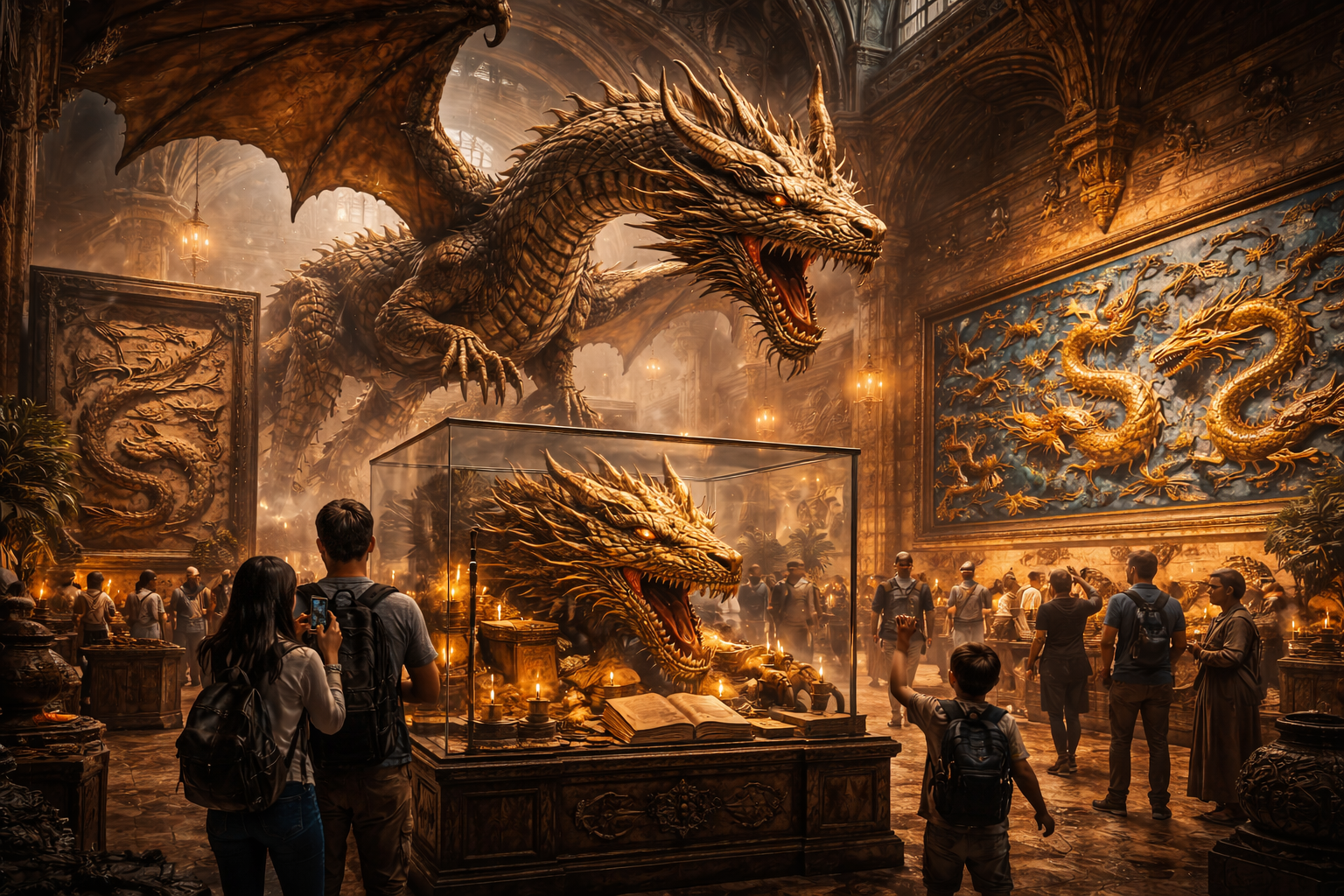
At the end of every dragon story, there is an implied question. If the dragon has been slain, subdued, redeemed, or reasoned with, what remains?
The answer, consistently, is the world itself. And the world, it turns out, never fully lets go of dragons.
By the time dragons exit mythology and literature, they do not vanish. They migrate. They take refuge in stone, pigment, ritual, memory, and habit. They move into places where belief is no longer required, only recognition. If earlier ages asked how to defeat dragons, later ages ask something quieter and more revealing: where did we put them?
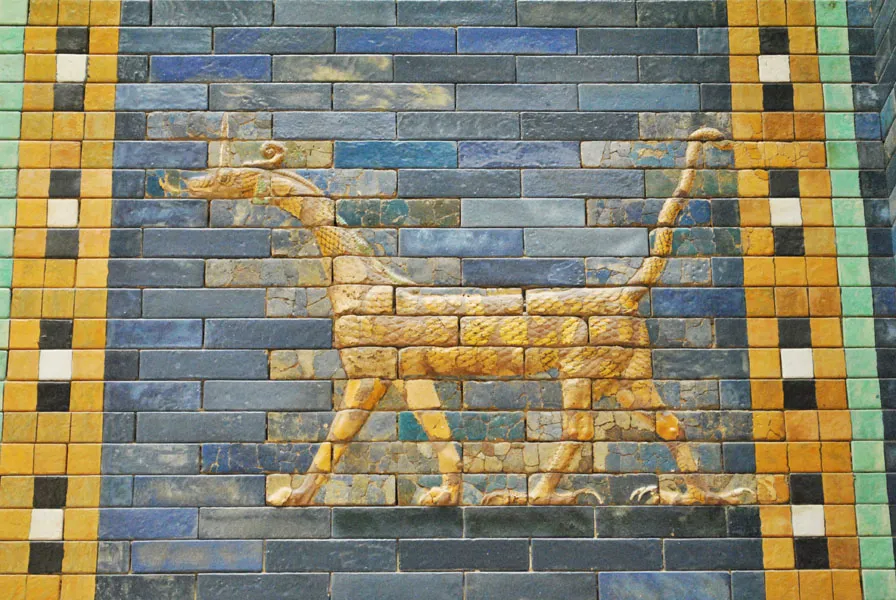
One of the most honest answers stands in plain sight. The Ishtar Gate was not decorated with dragons as an act of fantasy. It was an assertion of authority. The dragon, rendered in glazed brick, guarded the ceremonial entrance to the city. It announced power, continuity, and divine sanction. This was not a monster lurking outside civilization. It was embedded in its architecture.
That placement matters. A dragon on a gate does not threaten those within. It defines who belongs and who does not. It marks transition. You pass beneath it knowing you have crossed into something ordered, defended, and sanctioned by forces older than any single ruler.
The dragon becomes infrastructure.
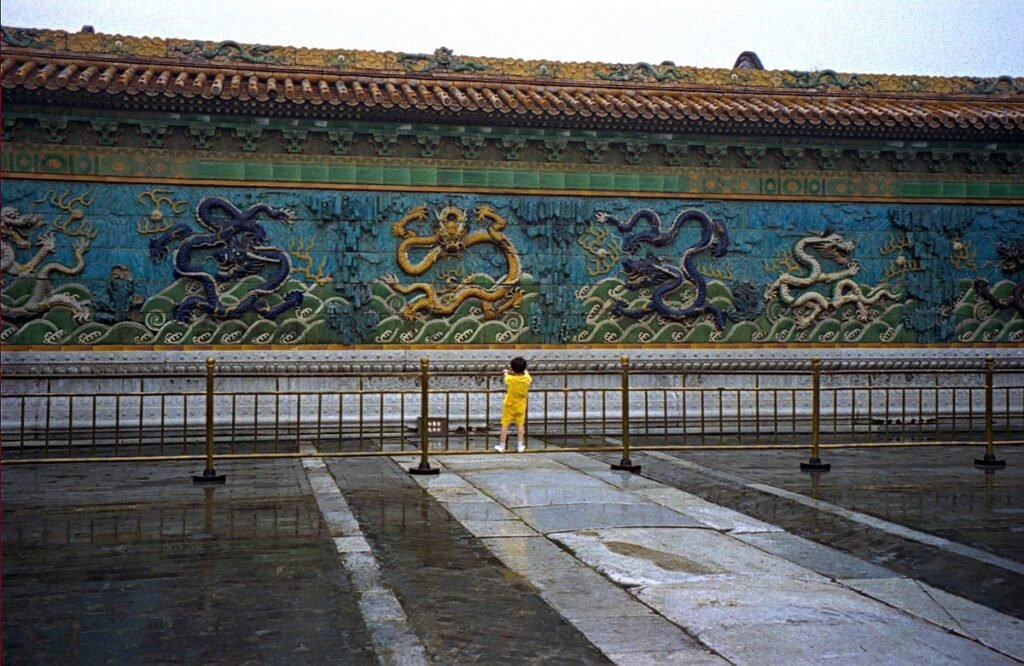
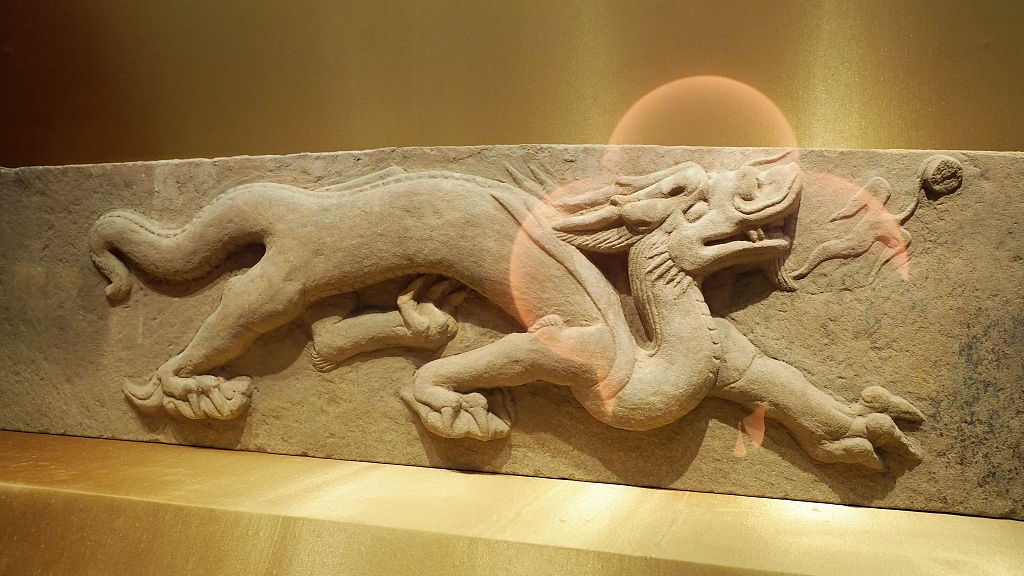
This role persists across cultures. Nine Dragon Walls rise not as curiosities but as declarations. They are not illustrations of stories. They are the story. They exist to stabilize, to protect, to remind viewers that power is layered and inherited. The dragon here is not narrative. It is environmental.
You do not defeat such a dragon. You live alongside it.
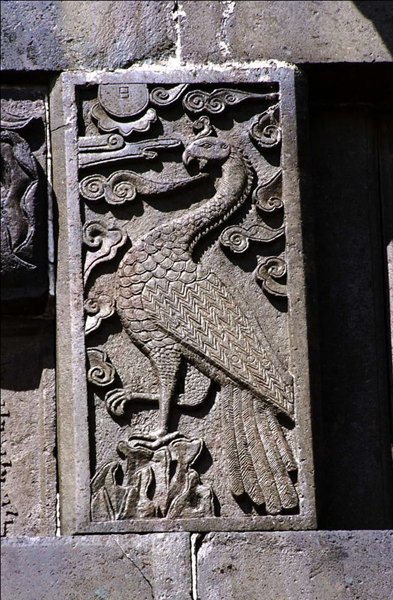
This architectural persistence reveals something essential. Even as cultures grow more rational, more administrative, more skeptical, they continue to rely on symbolic guardians. Dragons become acceptable because they no longer demand belief. They demand acknowledgment. They function as cultural memory rather than theological claim.
That distinction allows dragons to survive modernization.
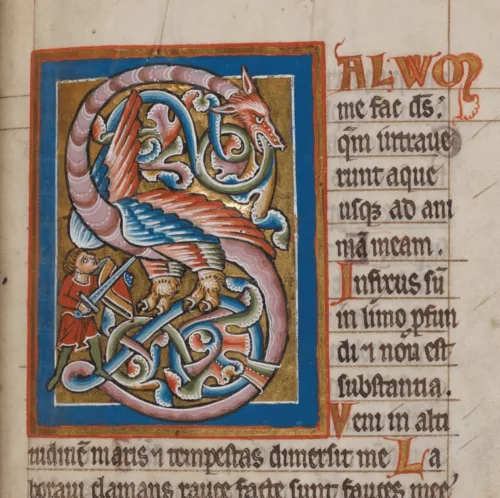
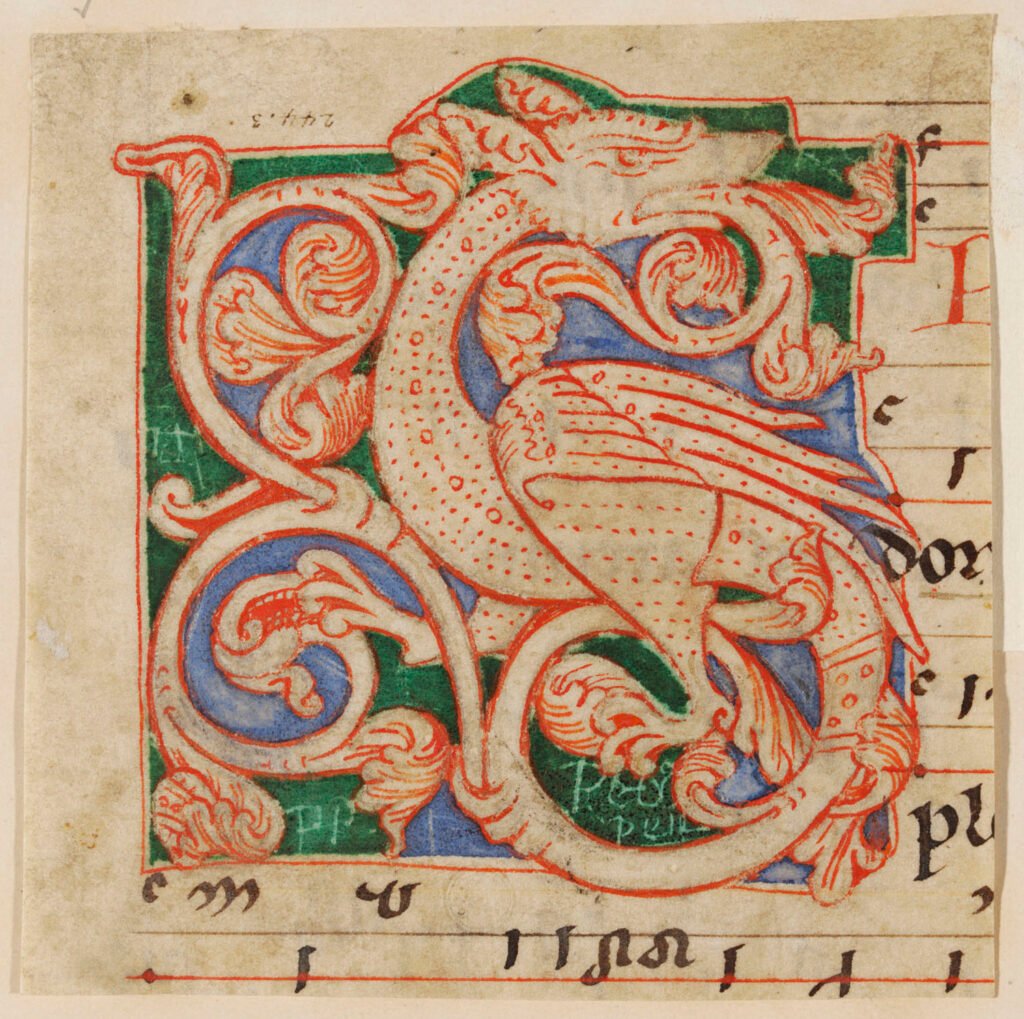
As belief recedes, art expands. Dragons flourish in illuminated manuscripts long after their literal existence is no longer assumed. Medieval artists devote extraordinary care to their depiction. Scales are shaded. Wings articulated. Bodies twisted into margins and capitals. The dragon becomes a space where imagination can roam freely under the protection of symbolism.
Illuminated dragons are fascinating precisely because they are contained. They are dangerous creatures rendered harmless by the page. They threaten no one. They illuminate text. They remind readers that chaos has been domesticated enough to be decorative, but not erased enough to be ignored.
This balance carries forward.
Dragon relics appear. Bones, teeth, claws, scales. Some are hoaxes. Some are misidentified fossils. Some are deliberately ambiguous. What matters is not their authenticity but their function. They anchor stories to physical objects. They allow belief to persist without insisting on certainty.
A dragon bone in a church or museum does not ask you to accept that dragons exist. It asks you to accept that people once needed them to exist.
That need does not disappear with scientific explanation. It relocates.
Modernity does not kill dragons. It reframes them.
As religious certainty gives way to historical consciousness, dragons become artifacts. As myth gives way to fiction, dragons become characters. As wilderness gives way to mapped terrain, dragons become metaphors.
We still speak of dragons, but we have learned to disguise them.
Corporations adopt dragon logos to signal power, endurance, and dominance. Cities use dragons as mascots to invoke heritage and resilience. Sports teams embrace dragon imagery to channel aggression and intimidation. None of this requires belief in dragons as creatures. It requires belief in what dragons represent.
Power that feels ancient. Authority that feels earned rather than invented. Strength that is dangerous but controlled.
The dragon has become a brand because it was always a brand.
Fantasy worlds multiply, and dragons populate them in every possible configuration. They are enemies, allies, gods, weapons, ecosystems. Tabletop games, novels, films, and games treat dragons as narrative constants. You can change everything else about a world, but if you want it to feel deep, you add a dragon somewhere in its past.
Even science fiction, a genre supposedly committed to the future, cannot fully escape them. Dragons become space-faring entities, energy beings, artificial intelligences with hoards of data instead of gold. The form adapts. The function persists.
The dragon is not tied to fire or scales. It is tied to scale.
That is why dragons still feel relevant. They give shape to problems that exceed individual capacity. Climate change is a dragon. Bureaucracy is a dragon. Legacy systems are dragons. Power concentrated beyond accountability is a dragon. We do not slay these dragons with swords. We manage them, negotiate with them, fear them, sometimes worship them.
The language remains because the experience remains.
There is also a more intimate sense in which dragons persist. We speak of waking dragons, feeding dragons, chasing dragons, guarding dragons. These phrases survive because they describe internal states as effectively as external threats. Ambition hoards. Fear coils. Memory burns.
The dragon has moved inside.
What is striking is how rarely we try to kill these modern dragons outright. We regulate them. Study them. Mythologize them anew. Even when we declare war on something framed as a dragon, we quickly discover that destruction alone is insufficient. Something survives. Something mutates.
This returns us to the oldest dragon stories. Ancient cultures understood that chaos could not be eliminated, only shaped. Eastern traditions understood that balance required ongoing attention. Northern myths accepted that some endings could not be avoided. Folklore acknowledged that local problems recur. Literature gave dragons voices so we could argue with them.
Modernity pretends to have outgrown all of this, but it has not replaced it. It has only changed the vocabulary.
Museums curate dragons. Architects design them into skylines. Artists reimagine them endlessly. Writers resurrect them. Gamers befriend them. Children still recognize them instantly, without explanation.
That recognition is the key.
No one has to teach a child what a dragon feels like. They know immediately whether a dragon is dangerous, wise, cruel, or sad. They sense scale. They understand threat and awe instinctively. Dragons bypass analysis and go straight to intuition.
That intuitive clarity is rare.
It explains why dragons are still sought rather than avoided. We go looking for them now. We hunt them in archives, ruins, museums, stories. We trace them through cultures and centuries. We photograph them. Restore them. Rebuild them digitally.
Dragon hunting has become an act of preservation rather than conquest.
We no longer ask how to kill the dragon. We ask what it meant, what it guarded, and why it mattered enough to survive.
That question carries responsibility. If dragons are expressions of collective fear, power, and memory, then studying them is not escapism. It is archaeology of the imagination. It tells us what earlier cultures refused to ignore and what we still struggle to articulate.
In a world obsessed with optimization and efficiency, dragons remain stubbornly inefficient symbols. They are excessive. They linger. They demand attention disproportionate to their utility. And yet, we keep them.
Perhaps because dragons do something no algorithm can. They remind us that not everything important is solvable, scalable, or clean. Some things must be carried, remembered, negotiated with across generations.
The dragon endures because it is honest about that burden.
At the beginning of this series, I wrote about encountering dragons before I knew their names, in a bookshop filled with stories that crossed borders without explanation. At the end of it, I find myself returning to the same realization from a different angle.
Dragons were never just creatures of the past. They were rehearsals for the present.
They taught us how to think about power without simplifying it, about danger without trivializing it, about survival without pretending permanence. They taught us that some guardians cannot be removed without collapsing what they protect.
So where do dragons still live?
They live in stone and ink, in logos and language, in fears we cannot quite name and systems we cannot quite dismantle. They live wherever scale exceeds control and memory exceeds lifespan.
They live wherever we still need a shape big enough to hold our unease.
And as long as that need remains, the dragon will not go extinct.
It will simply wait, coiled just beneath the surface, for us to notice it again.
Other posts in this series:
- How Dragons found me: My lifelong fascination with them
- Dragons, Part 1: When Chaos Had Scales, or Dragons of the Ancient World
- Dragons, Part 2: Beneath Clouds and Currents – Dragons of the East
- Dragons, Part 3: Coiled Around the World – Wyrms of the Northern Lands
- Dragons, Part 4: Saints, Serpents, and the Invention of Evil
- Dragons, Part 5: Village Nightmares and Clever Beasts: Dragons of Fable and Folklore
- Dragons, Part 6: From Fire to Ink: Dragons in Literature
- Dragons, Part 7: Where Dragons Still Live
👁️ 142 views