

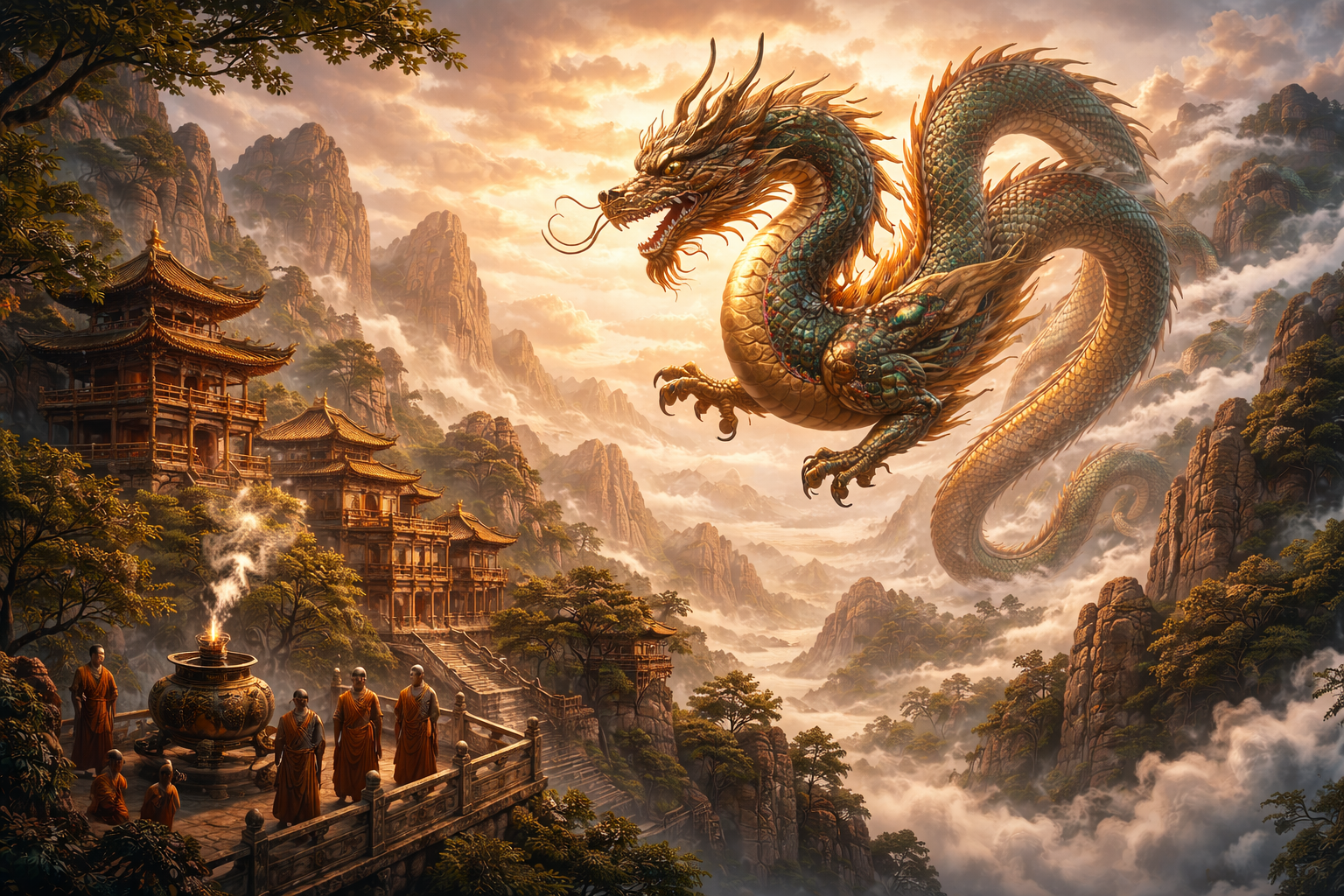
If the dragons of the ancient Near East were explanations for chaos, and the dragons of the classical world were guardians of thresholds, then the dragons of the East represent something far rarer in myth: alignment.
In East and Southeast Asia, dragons were never fallen creatures. They were never mistakes to be corrected or monsters to be removed from the world. They belonged. More than that, they maintained the world. Where Western traditions often cast dragons as obstacles between humanity and order, Eastern traditions placed dragons at the very center of order itself.
This single difference changes everything.
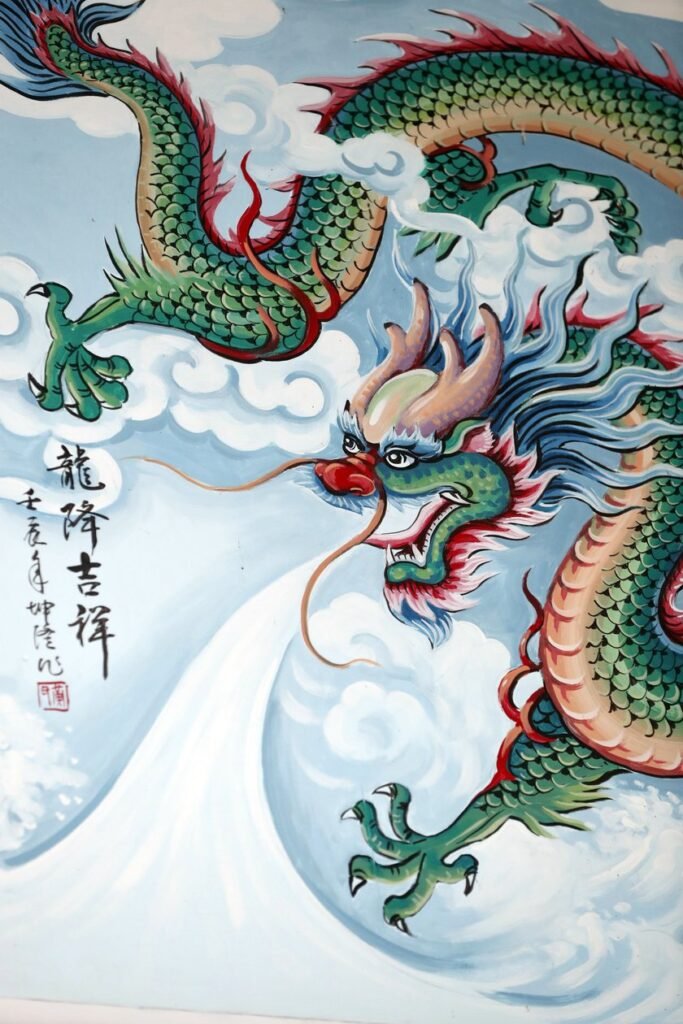
The Chinese dragon, the long, does not breathe fire. It commands rain. It does not hoard treasure. It governs circulation. Its body is composite, not monstrous. Antlers, scales, whiskers, claws. Not because it is unnatural, but because it is inclusive. It gathers attributes rather than exaggerating one. The dragon’s form mirrors its function: it is a synthesis of forces rather than a distortion of them.
To encounter a dragon in these traditions is not to face annihilation. It is to face responsibility.
Rain is not symbolic in agrarian societies. It is survival. Too little, and crops fail. Too much, and floods destroy entire regions. The dragon’s power lies in moderation, timing, balance. It does not unleash chaos arbitrarily. It responds to moral, cosmic, or ritual imbalance. When the dragon withholds rain, the failure is not framed as malice. It is framed as misalignment.
This is a crucial philosophical departure. The dragon is not blamed for disorder. Disorder is evidence that something else has gone wrong.
In Chinese cosmology, dragons are intimately tied to water. Rivers, seas, clouds, storms. They rise in spring and retreat in autumn. They are seasonal, cyclical, predictable in their unpredictability. Even their movements follow a logic that humans can study, honor, and attempt to harmonize with. Temples are built. Rituals performed. Calendars adjusted. The dragon is not fought. It is consulted.
That posture toward power is striking.
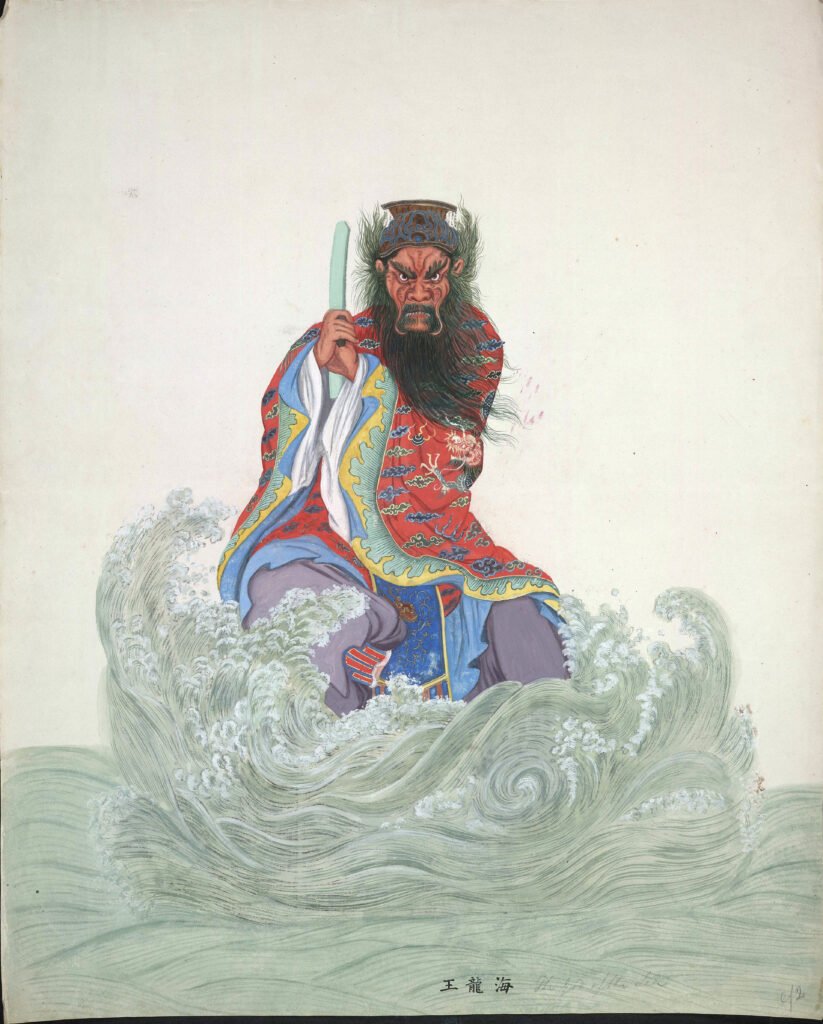
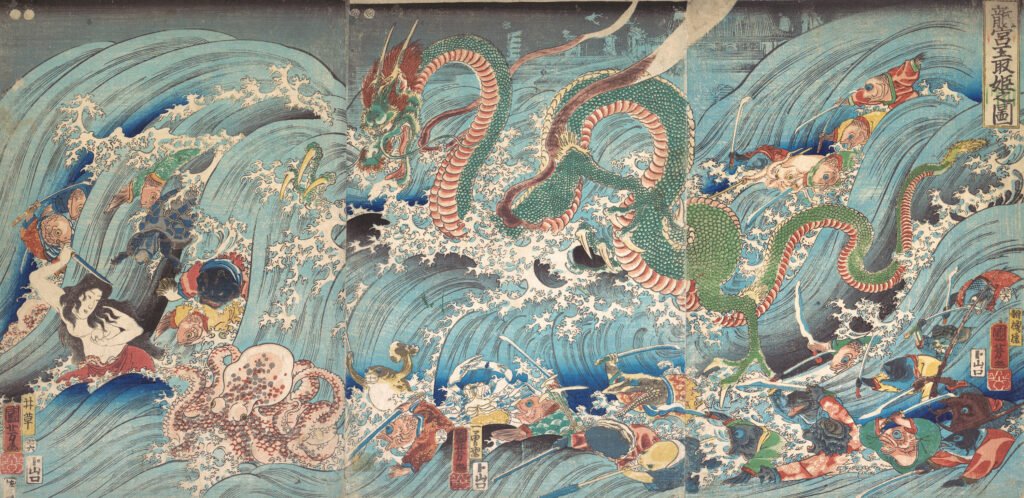
The Dragon Kings, rulers of the four seas, exemplify this relationship. They are sovereigns, not beasts. They have courts, laws, obligations. They can be petitioned and reprimanded. Stories abound of emperors or monks confronting Dragon Kings not with swords, but with moral authority. When a Dragon King floods a region unjustly, he can be punished, demoted, or corrected.
This is not sentimental mythology. It is a political imagination at work. Power is vast, but it is not unaccountable. Even forces beyond human scale are subject to order.
The dragon, here, becomes a model rather than a threat.
Japan inherits and reshapes these ideas, grounding dragons more firmly in specific landscapes. Japanese dragons are often tied to particular lakes, waterfalls, or coastal regions. They are less imperial and more local. Less abstract and more relational. They remember villages. They remember agreements. They remember insults.
Where Chinese dragons often represent cosmic alignment, Japanese dragons frequently embody negotiated coexistence. They can be benevolent or destructive depending on how humans behave toward their domain. Disrespect the river, and the dragon responds. Honor it, and the dragon protects.
This localized dragon does something important. It collapses the distance between myth and daily life. The dragon is not a distant symbol of the emperor’s mandate. It is the spirit of the place you depend on.
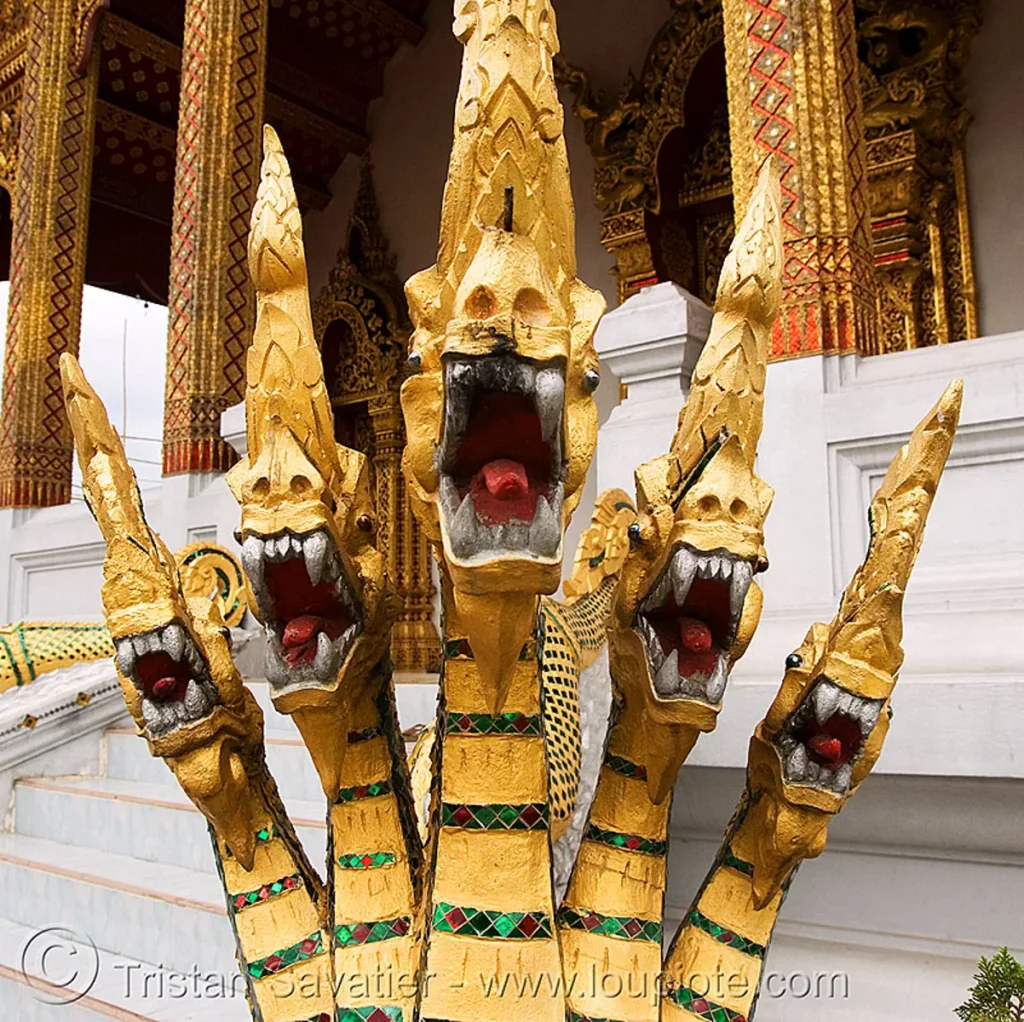
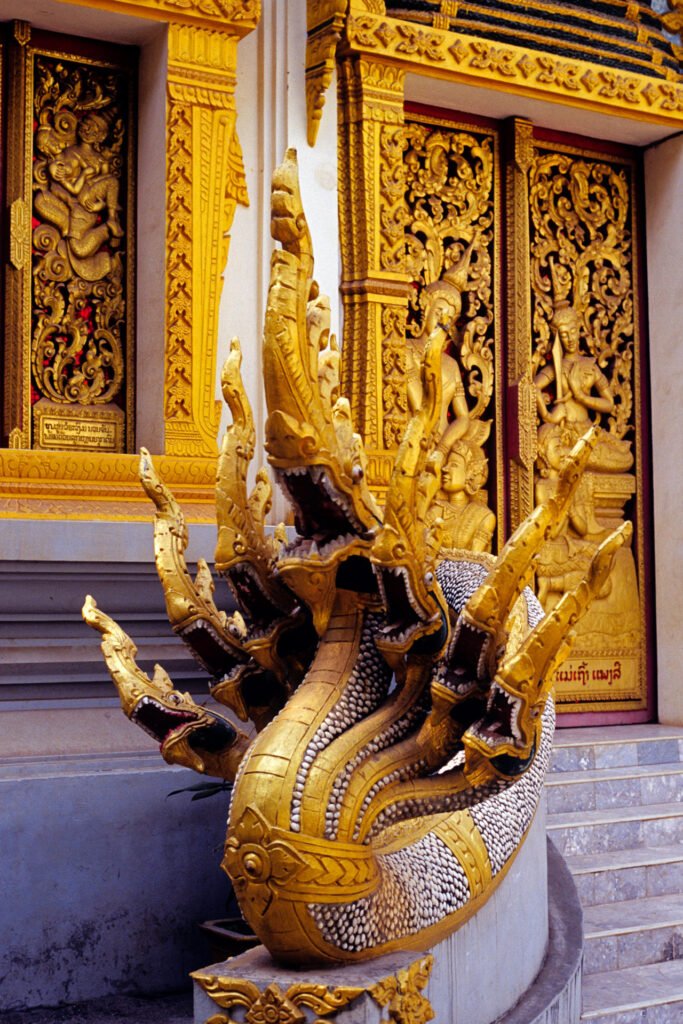
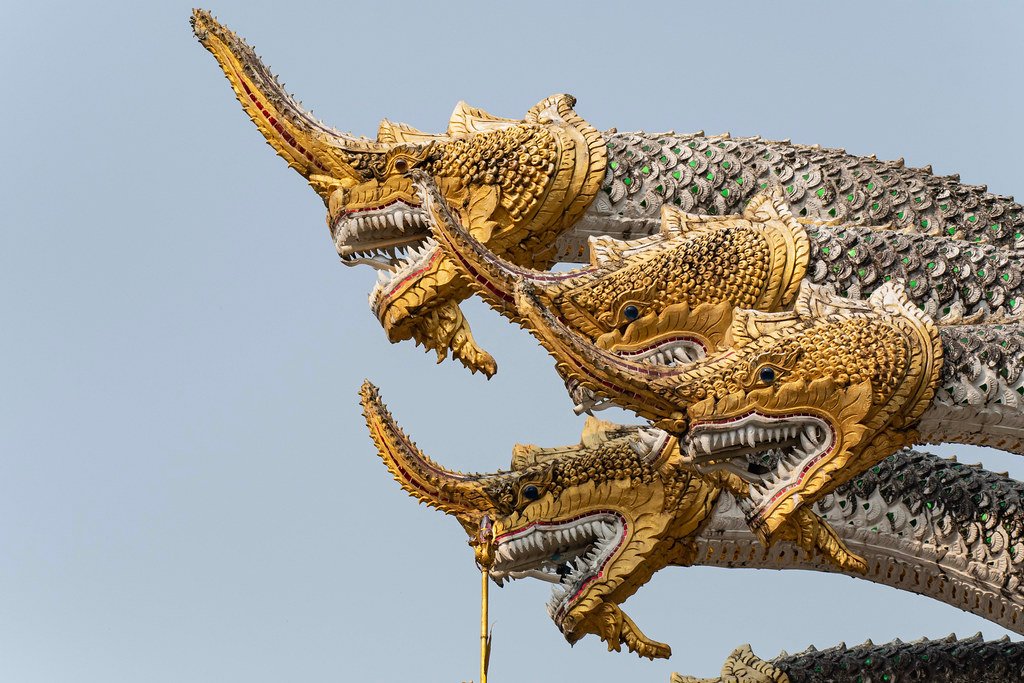
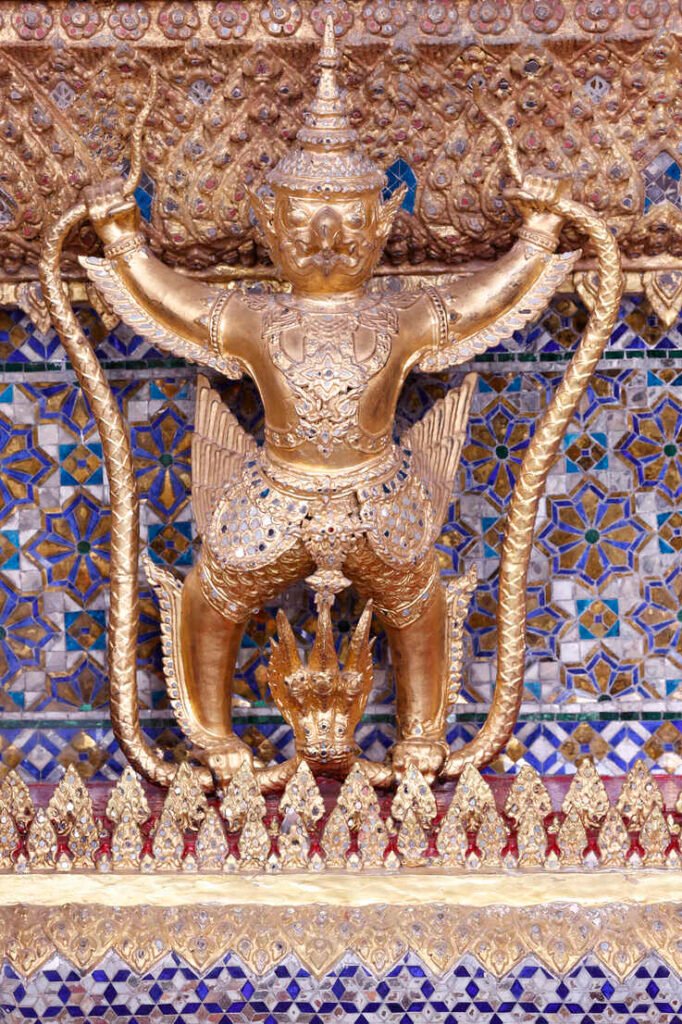
Across Southeast Asia, naga traditions further complicate the picture. These serpent-dragons move between worlds. They dwell beneath rivers, within mountains, beneath cities. They are ancestors, protectors, and sometimes founders. In many traditions, naga are linked to fertility, kingship, and the legitimacy of rule. A ruler’s authority is not simply inherited or conquered; it is confirmed through relationship with the naga.
Again, the dragon is not an adversary to be slain. It is a power to be aligned with.
What emerges across these traditions is a dragon that does not symbolize chaos but continuity. It does not disrupt civilization. It sustains it. It does not challenge legitimacy. It underwrites it. This is why dragons become imperial symbols rather than enemies of the state. To rule under the dragon is to claim harmony with heaven and earth.
This worldview produces a very different moral landscape. In Western dragon stories, heroism often consists of violent intervention. The dragon must be killed so the world can move forward. In Eastern traditions, heroism often consists of restraint, wisdom, and correct action. The dragon does not need to be destroyed. It needs to be respected.
Failure, in these stories, is rarely about fear. It is about arrogance. Humans suffer not because dragons are cruel, but because humans assume mastery over systems they do not understand. Floods, droughts, storms, earthquakes. These are not punishments in the moral sense. They are corrections.
The dragon enforces scale.
This also explains why Eastern dragons persist comfortably into the modern era without needing reinvention. They never had to be redeemed. They were never demons. They were already integrated into cosmology, architecture, art, and statecraft. Nine-dragon walls are not curiosities. They are statements. They declare continuity, protection, and legitimacy. They remind viewers that power is not merely human.
Even visually, Eastern dragons resist simplification. They are long, sinuous, almost calligraphic. Their bodies move like water and wind. They do not dominate the frame. They flow through it. You rarely see an Eastern dragon isolated against an empty background. It is always in conversation with clouds, waves, mountains, or sky.
This is not an aesthetic choice alone. It reflects a metaphysical assumption. Nothing exists alone. Everything participates in something larger.
Contrast this with the Western dragon, increasingly depicted as a singular object of confrontation. A thing to be faced head-on. Eastern dragons are rarely faced directly. They are approached obliquely, through ritual, poetry, seasonal awareness, and humility.
One could argue that these traditions reflect different relationships to nature itself. Where some cultures seek mastery, others seek accommodation. Where some imagine victory as domination, others imagine it as balance restored.
Neither approach is naïve. Both emerge from lived realities. But the dragon tells you which story a culture prefers to tell about power.
There is another subtle but important difference. Eastern dragons are rarely obsessed with hoards. Wealth, when associated with dragons, is tied to abundance rather than accumulation. Rain brings crops. Rivers bring trade. Stability brings prosperity. The dragon’s “treasure” is flow, not storage.
This matters because it reframes the later Western obsession with dragons and gold. That version of the dragon reflects anxieties about private accumulation, surplus, and inequality. Eastern dragons represent public goods. Their wealth benefits everyone when properly managed.
This does not make Eastern dragons gentle or harmless. They are still terrifying when angered. Floods still kill. Storms still destroy. But the terror is not moralized. It is contextualized. The dragon does not need to be hated to be feared.
Perhaps this is why Eastern dragon stories feel less obsessed with finality. There is no ultimate dragon-slaying that resolves everything forever. There is maintenance. Attention. Ongoing relationship. The dragon remains because the world remains unstable.
In that sense, Eastern dragon mythology feels strangely modern. It anticipates ecological thinking. It recognizes feedback loops. It understands that systems cannot be conquered without consequence. The dragon is the system made visible.
For someone raised on stories where dragons must be defeated, encountering these traditions feels disorienting at first. Where is the climax? Where is the victory? But that discomfort is instructive. It reveals how deeply we are conditioned to equate progress with elimination.
Eastern dragons suggest a different metric. Progress is measured by continuity without catastrophe.
As this series moves forward, the contrast between Eastern and Western dragons will sharpen. Dragons will become moralized, demonized, localized, and eventually personalized. They will shrink from cosmic forces into village nightmares and literary characters.
But here, in the East, the dragon remains vast and strangely patient. It does not need to justify its existence. It was never expelled from the moral order. It never had to be explained away.
It waits in clouds and currents, coiled around the assumption that the world is not meant to be conquered, only understood well enough to survive.
That may be the most radical dragon of all.
Other posts in this series:
- How Dragons found me: My lifelong fascination with them
- Dragons, Part 1: When Chaos Had Scales, or Dragons of the Ancient World
- Dragons, Part 2: Beneath Clouds and Currents – Dragons of the East
- Dragons, Part 3: Coiled Around the World – Wyrms of the Northern Lands
- Dragons, Part 4: Saints, Serpents, and the Invention of Evil
- Dragons, Part 5: Village Nightmares and Clever Beasts: Dragons of Fable and Folklore
- Dragons, Part 6: From Fire to Ink: Dragons in Literature
- Dragons, Part 7: Where Dragons Still Live
👁️ 735 views