

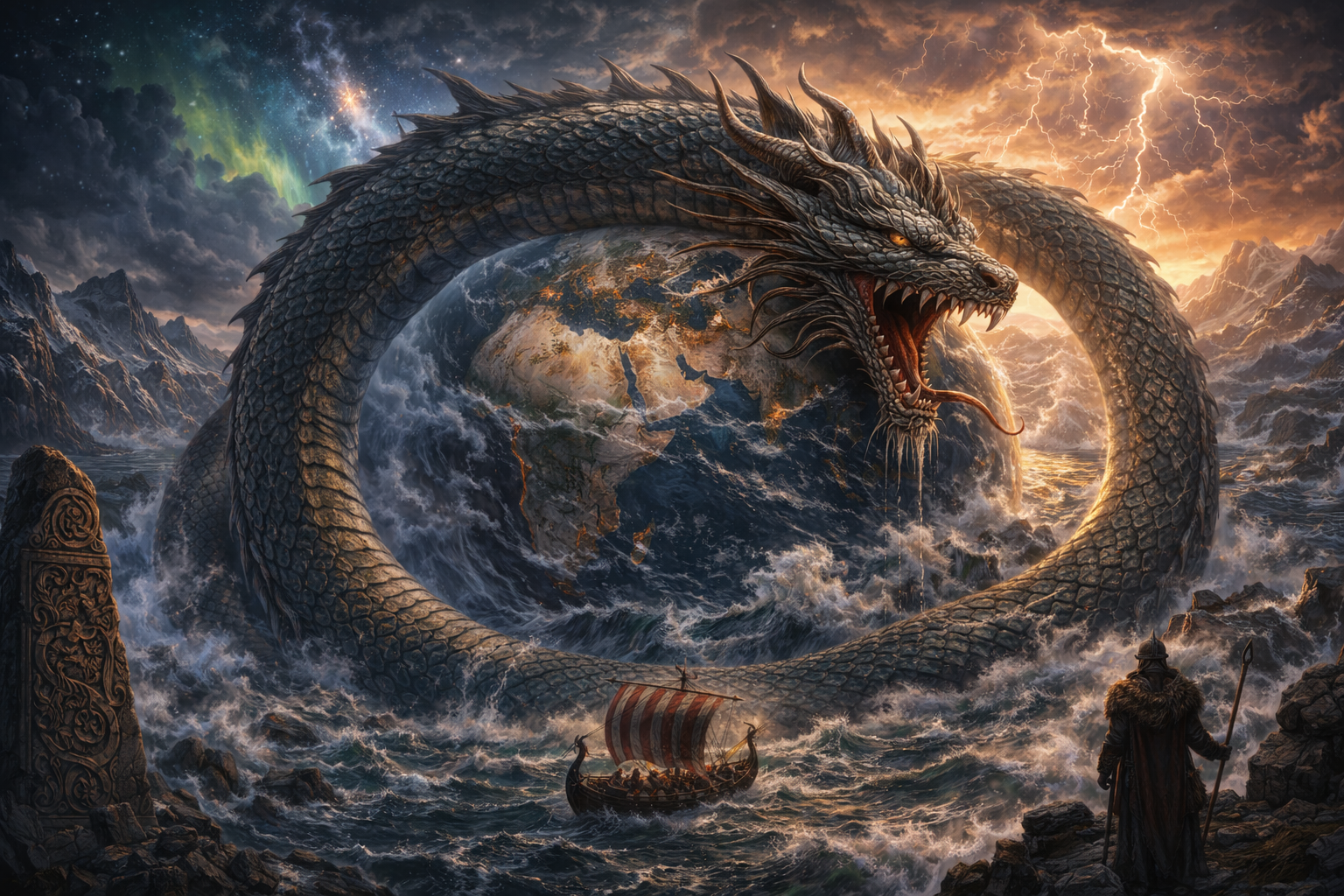
The dragons of the North are colder.
Not merely in climate, but in temperament. They do not rage against the world like ancient chaos-beasts, nor do they harmonize with it like the dragons of the East. Northern dragons endure. They wait. They bind themselves to fate and refuse to let go.
If Eastern dragons are about balance, Northern wyrms are about inevitability.
In the mythologies of the Germanic and Norse worlds, the dragon often appears not as a problem to be solved, but as a condition that defines the limits of existence. It is not an interruption of the world’s order. It is a feature of it. The dragon does not threaten apocalypse; it is the shape apocalypse takes when the time comes.
Jörmungandr, the Midgard Serpent, is the clearest expression of this idea. Cast into the sea as a child, it grows until it coils around the entire world, biting its own tail. The image is both elegant and terrifying. The dragon does not invade Midgard. It contains it. The world exists because the serpent holds it together, even as its presence guarantees eventual destruction.
This is not a dragon that hoards gold or terrorizes villages. It does not need to. Its power lies in scale. It embodies the knowledge that the world is finite, that it has edges, and that those edges are watched.
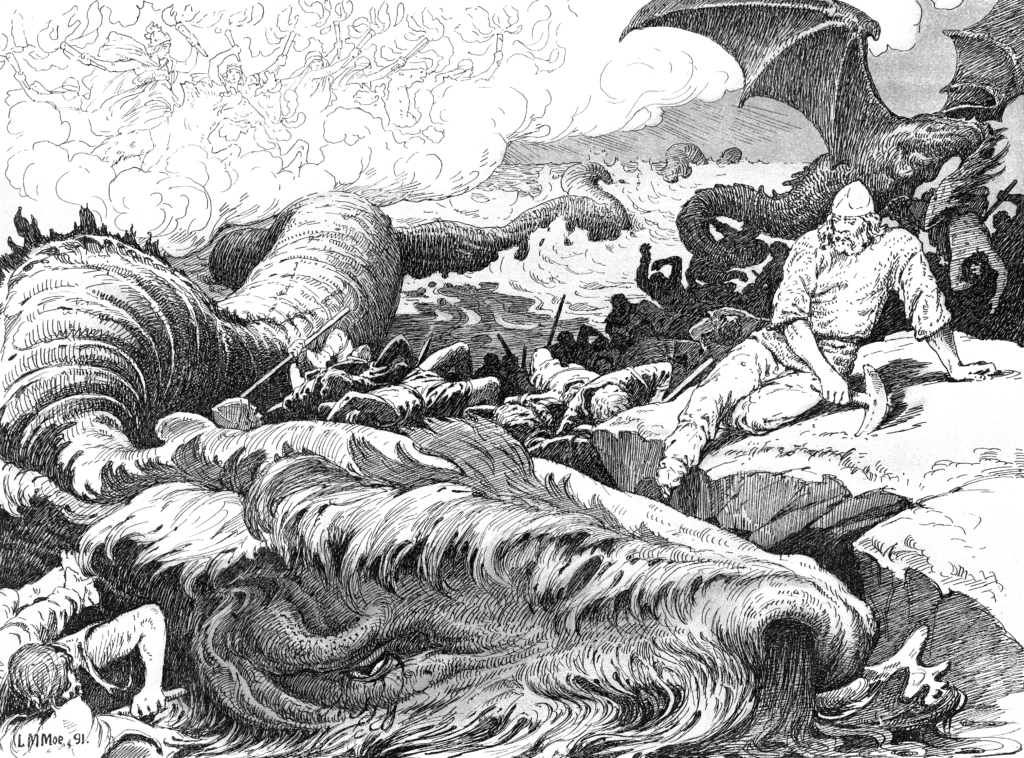
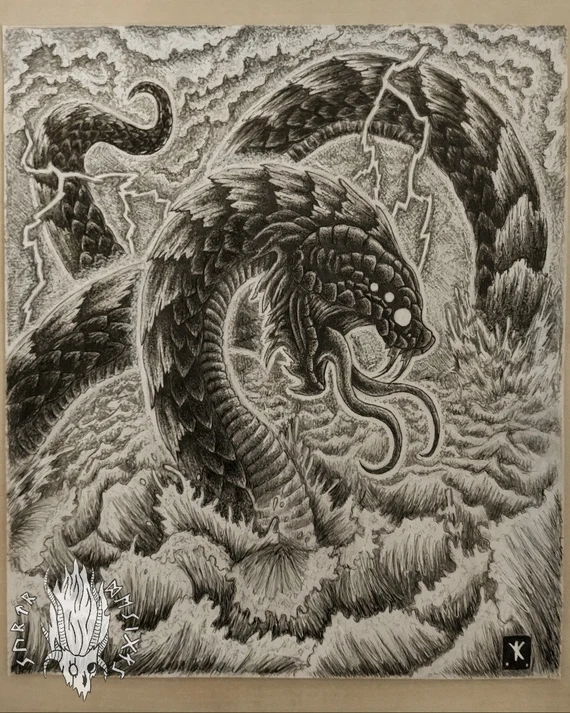
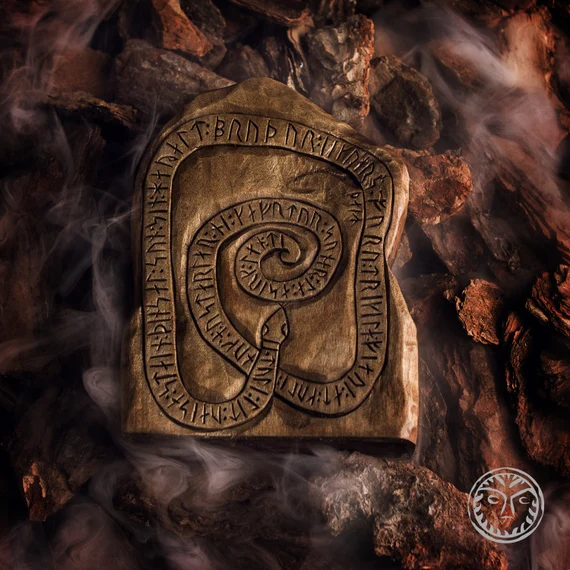
The gods do not kill Jörmungandr. They cannot. They can only delay the reckoning. When Ragnarök comes, the serpent rises, poisons the sky and sea, and is slain by Thor at the cost of Thor’s own life. Victory, such as it is, lasts only nine steps.
That exchange is telling. The dragon’s death does not restore order. It ends it.
Northern dragon myths are steeped in this kind of fatalism. They do not promise redemption or renewal. They promise clarity. You will know how things end. You will not escape it. What matters is how you meet it.
That worldview shapes the other great dragons of the North.
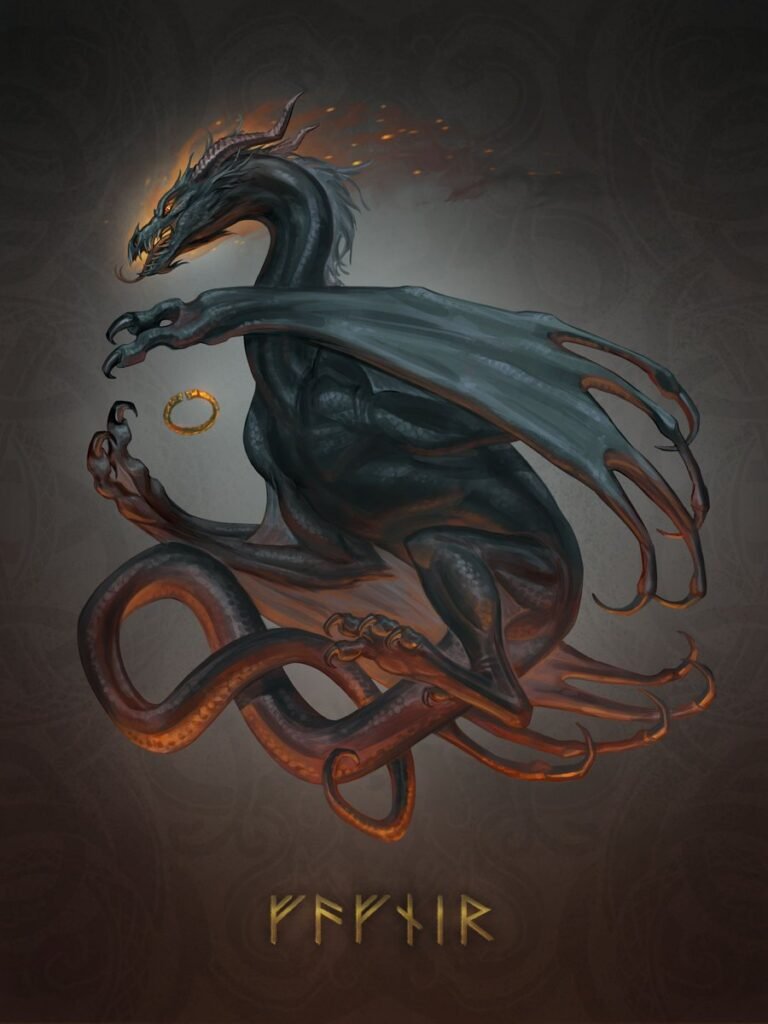
Fáfnir, once a dwarf, becomes a dragon not through curse or divine punishment, but through choice. He murders his father, hoards gold, and withdraws from the world. Over time, his greed reshapes him. He does not merely guard treasure. He becomes inseparable from it. His body coils around the hoard as if attempting to merge with it.
This is one of the earliest examples of the dragon as moral transformation rather than external threat. Fáfnir is not a dragon that happens to be greedy. He is greed given a body.
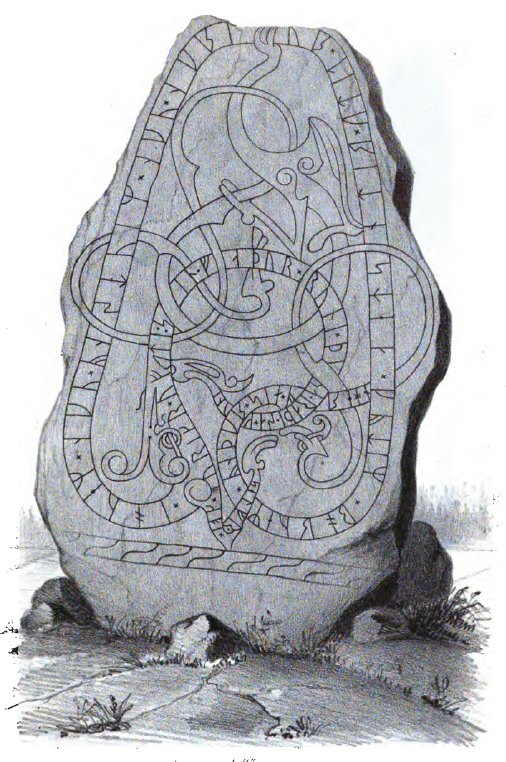
When Sigurd slays him, the act is not framed as the triumph of good over evil. It is an inheritance. Sigurd gains knowledge, wealth, and curse alike. The dragon’s death transfers its consequences rather than erasing them.
Here again, the dragon is not a narrative endpoint. It is a pivot.
In these stories, dragons are rarely encountered in open fields or city streets. They dwell in liminal spaces. Barrows. Caves. Desolate moors. Places that feel abandoned, forgotten, or deliberately avoided. These habitats matter. They are spaces where human order thins out and older claims reassert themselves.
A barrow is not merely a grave. It is a memory made physical. To place a dragon there is to say that the past is not inert. It defends itself.
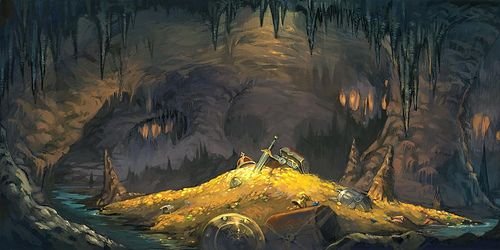
This idea reaches one of its starkest expressions in the dragon of Beowulf. This dragon is not ancient beyond reckoning. It is provoked. A single cup is stolen from its hoard, and the dragon responds with annihilation. Villages burn. Kingdoms fall. The dragon’s fury is disproportionate because it is not personal. It is systemic. A boundary has been violated, and the response is absolute.
Beowulf’s decision to face the dragon is not framed as youthful heroism. It is an old king confronting the inevitability he has delayed for a lifetime. The dragon does not test his strength. It tests his legacy. When both die, the poem does not celebrate victory. It mourns extinction. The future is uncertain. The hoard, useless without a people to benefit from it, is buried again.
The dragon outlasts the hero in every meaningful sense.
Even lesser-known Northern dragon legends follow this pattern. The Mester Stoorworm of Orcadian folklore is a creature of impossible scale, devouring livestock and people alike, threatening entire regions. It is not clever. It is not cruel. It is simply too large to coexist with human settlement. The solution is not a duel but a stratagem that uses fire and poison, exploiting the dragon’s own appetite against it.
The dragon dies, but the land remains scarred. Survival does not feel like triumph. It feels like relief.
Across these stories, dragons function as stress tests for human systems. What happens when something emerges that your tools cannot easily defeat? When courage alone is insufficient? When victory demands sacrifice that cannot be repaid?
The Northern answer is blunt: you do what you must, and you accept the cost.
There is little interest in moralizing the dragon itself. The dragon is not wicked. It is excessive. Too large. Too old. Too embedded. It occupies space that humans want but cannot fully claim.
This is why Northern dragons are so closely associated with hoards. Gold, weapons, relics. These are not merely valuables. They are condensed history. Wealth accumulated across generations, frozen in place. The dragon does not create this accumulation. It sits atop it, ensuring it never re-enters circulation.
In this sense, the Northern dragon is a guardian of stagnation.
That stagnation is not always framed as evil. Sometimes it is tragic. The hoard represents unrealized potential, futures that never come to pass because the past refuses to loosen its grip. Slaying the dragon releases the hoard, but often too late. The hero dies. The kingdom collapses. The wealth is buried again.
The message is not subtle. Some hoards cannot be redeemed.
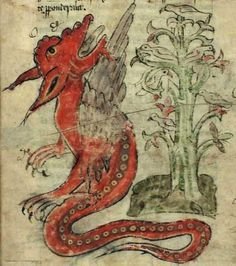
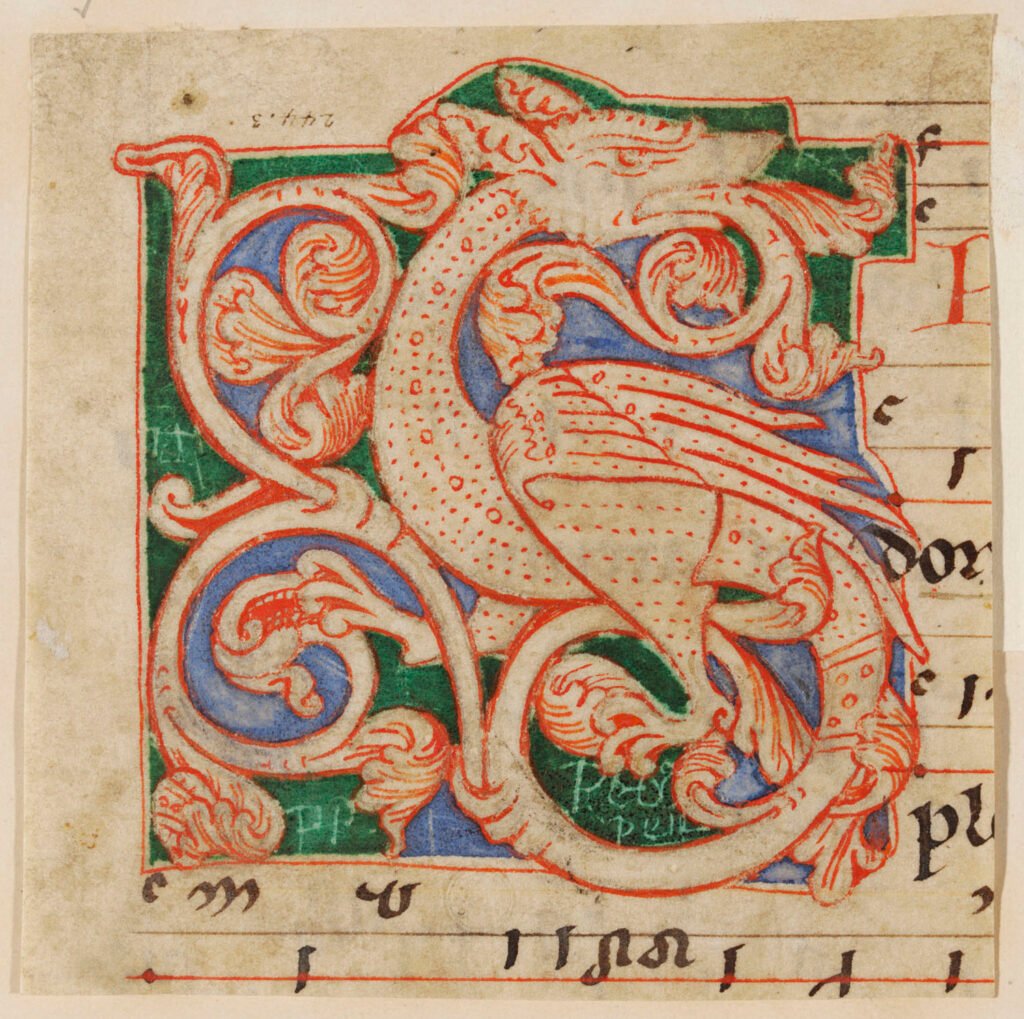
Northern dragons are also notably solitary. They do not form courts like Eastern Dragon Kings. They do not embody communal cosmology. They are isolated figures, often the last of their kind. This loneliness reinforces their symbolic role. They are remnants. Survivors of earlier ages that no longer fit the present.
To encounter a dragon in these traditions is to confront something obsolete but undefeated.
That may be why these dragons feel so modern despite their age. They resonate with societies that understand decline, entropy, and the limits of heroism. They do not promise progress. They promise reckoning.
The dragon does not need to win to be right.
In the cold logic of the North, the world is not trending toward improvement. It is trending toward ending. Dragons are not obstacles to that trajectory. They are milestones along it. Markers that tell you how close you are to the edge.
This is a far cry from later medieval dragons that exist primarily to be slain, or from modern fantasy dragons that often oscillate between villain and ally. Northern wyrms do not care which role you assign them. They will outlast your categories.
What they offer instead is a kind of clarity that warmer myths avoid. They remind us that some forces cannot be negotiated with, some histories cannot be undone, and some endings cannot be escaped.
To live well in such a world is not to hope for permanent victory. It is to act with courage even when the outcome is known.
That is the lesson the wyrms teach.
They coil around the world not to choke it, but to define its limits. And when they finally uncoil, the world ends not in chaos, but in fulfillment of a promise that was always there.
Cold. Patient. Honest.
Other posts in this series:
- How Dragons found me: My lifelong fascination with them
- Dragons, Part 1: When Chaos Had Scales, or Dragons of the Ancient World
- Dragons, Part 2: Beneath Clouds and Currents – Dragons of the East
- Dragons, Part 3: Coiled Around the World – Wyrms of the Northern Lands
- Dragons, Part 4: Saints, Serpents, and the Invention of Evil
- Dragons, Part 5: Village Nightmares and Clever Beasts: Dragons of Fable and Folklore
- Dragons, Part 6: From Fire to Ink: Dragons in Literature
- Dragons, Part 7: Where Dragons Still Live
👁️ 541 views