

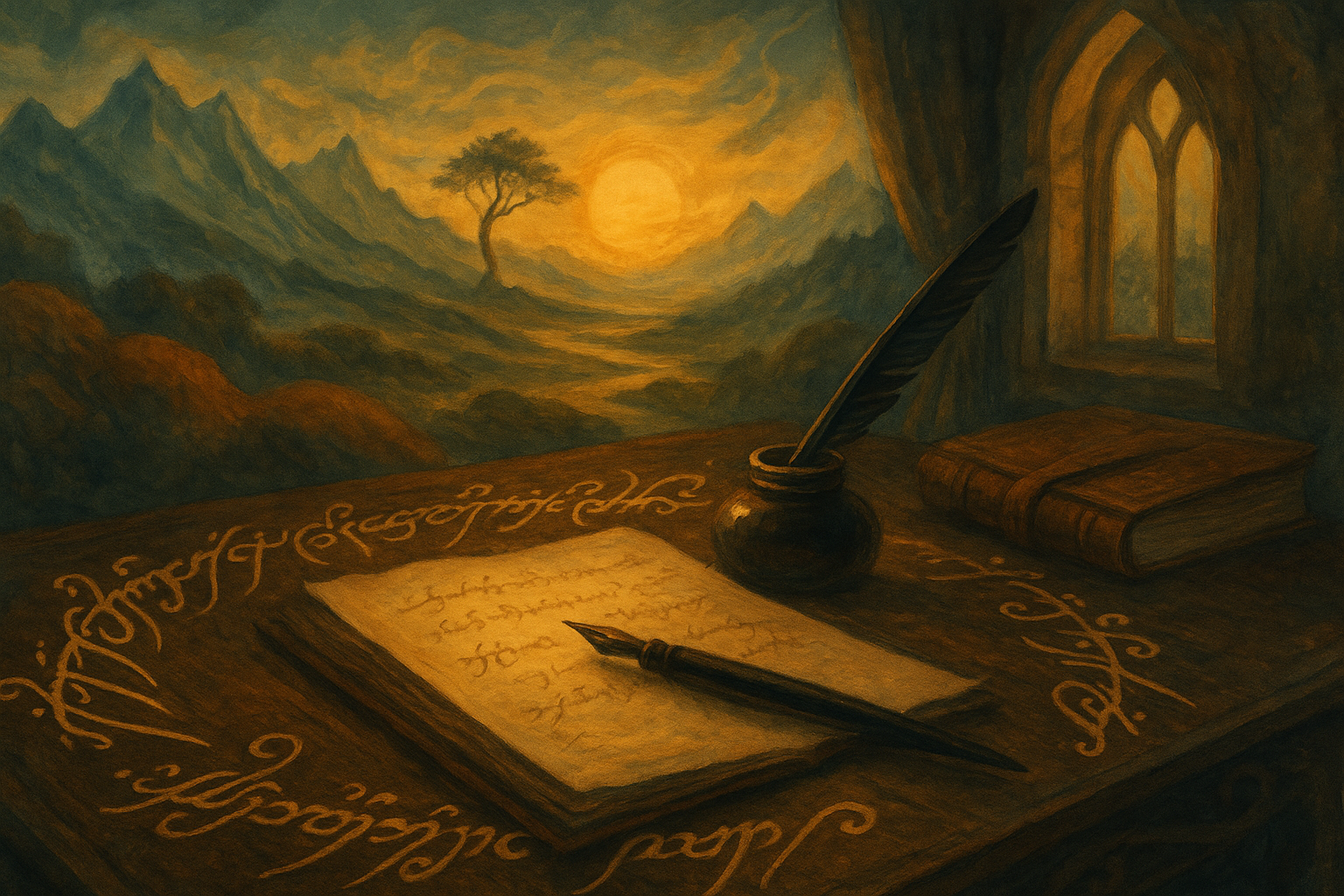
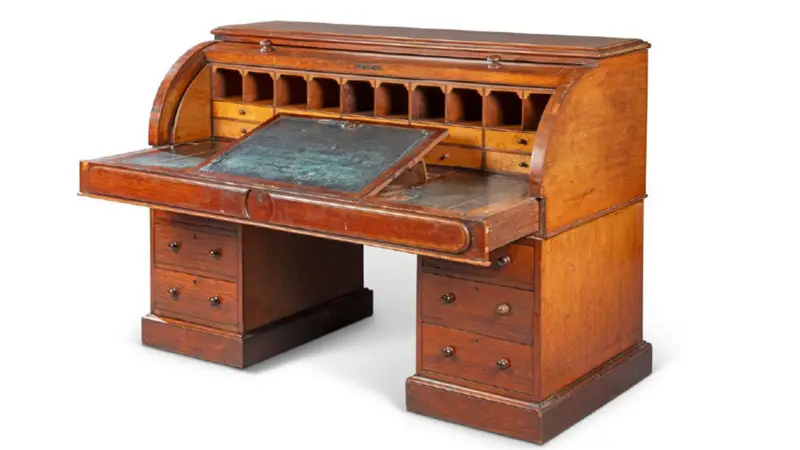
If you stand before Tolkien’s desk today – the same one that still carries faint ink rings and scratches from half a century ago – the first thing you notice isn’t the artifacts. It’s the stillness.
A quiet that feels earned. A silence that once held thunder.
That desk is a monument to slowness.
No screens, no hum of electricity. Just a dip pen, an ink bottle, and an old man writing at a pace that seems impossible now. Yet that slow rhythm – the long pauses, the deliberate gestures – was exactly what gave birth to Middle-earth.
The Rhythm of Resistance
Tolkien’s pen did not glide; it resisted. Steel on paper has friction – a drag that demands awareness. Each stroke is a decision. Each pause, a breath. He wasn’t typing into abstraction; he was carving meaning into fiber. That resistance shapes thought. When your pen hesitates, so does your mind – just long enough to test a word, to see if it fits the sentence, the rhythm, the myth. In our world of frictionless creation, that feels almost revolutionary. We rush to finish, he lingered to listen. His nib was both instrument and metronome.
Ink as Time
A fountain pen dries between sentences. A dip pen dries even faster. Each refill is a pause – a forced moment of reflection. You dip, tap, breathe, then begin again.
In those seconds, time folds in on itself. That pause between words becomes part of the story’s rhythm. You can feel that tempo in Tolkien’s prose – long, winding sentences with natural breaks, where the mind seems to wander and return. It’s as if his paragraphs were built on the inhale and exhale of writing by hand.
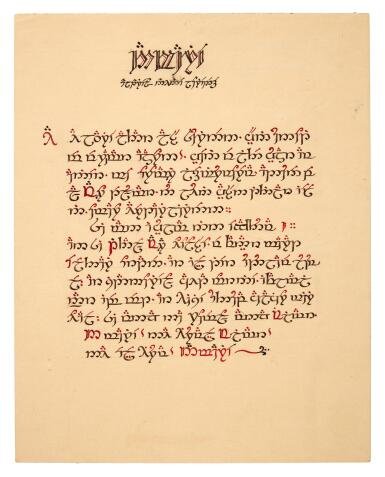
Ink, too, tells time. In many manuscripts, the hue shifts mid-page – blue to brown, wet to dry. The change isn’t just chemical; it’s temporal. You’re looking at the difference between morning and afternoon, between inspiration and fatigue. Tolkien’s pages are diaries of effort.
The Craft of Deliberate Making
The modern mind is trained to produce. Tolkien’s was trained to linger.
He rewrote entire passages by hand not because he had to, but because he wanted to hear them again. The process of rewriting was a form of listening – to the music of words, the shape of sentences, the weight of silence between them.
We talk about craft as if it’s separate from art. It isn’t. Craft is the discipline that makes art possible. Tolkien knew that. He understood that every line worth writing comes from the patient conversation between hand and tool.
Slowness as Virtue
We measure creativity today in speed – how quickly we can finish a draft, publish a post, get to the next idea. But Tolkien’s genius grew in the opposite direction. His world expanded because he gave it time. He let sentences breathe, let words rest in ink before moving on.
He wasn’t afraid of the empty page. He trusted that waiting is part of making.
There’s a lesson in that for anyone who creates today: if you want your work to endure, let it age while you’re making it. Let it take its time to become inevitable.
The Weight of Ink
The tools themselves were simple – wood, steel, glass. Yet they were also anchors. They kept his imagination tethered to the real. Every dip of the pen was a reminder that stories aren’t made of abstractions; they’re made of materials.
The grain of paper, the viscosity of ink, the sound of metal scratching – these are the textures of creation. And because Tolkien worked within them, his world feels physical, touchable, alive.
Writing as Contemplation
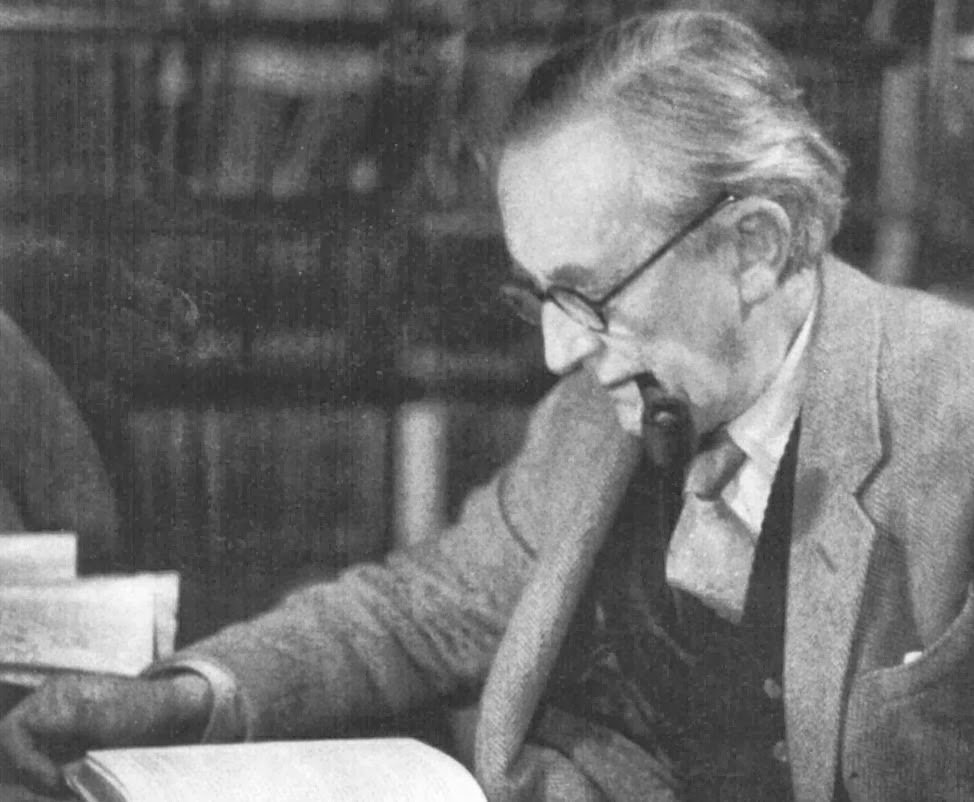
What Tolkien’s pen teaches us isn’t just craft – it’s contemplation.
Writing slowly means thinking slowly. It means listening to your own hesitations and recognizing them as part of the process. There’s an ancient discipline in that, one shared by scribes, monks, artists, and yes, professors of philology.
To write by hand is to touch language. It’s to feel its edges and its grain. And perhaps that’s why Middle-earth feels so textured – because it was literally built through touch.
Reflection
The lesson of Tolkien’s pen is simple, but it cuts deep: creation requires friction.
The resistance of a nib on paper, the weight of waiting, the humility of revision – these are not obstacles; they’re ingredients.
He wrote slowly so his world could endure. Maybe that’s the only way to build something that lasts.
When you see his ink strokes now, faded but unbroken, you realize: Middle-earth was not typed into existence. It was earned – one careful, patient stroke at a time.
Essays in this series:
- The Pen of Middle-Earth: Tools that shaped J.R.R. Tolkien’s worlds
- The Pen of Middle-earth, Part I: Ink and Imagination – The Hand That Built Middle-earth
- The Pen of Middle-earth, Part II: The Instruments of Creation – Tolkien’s Pens, Nibs, and Inkwells
- The Pen of Middle-earth, Part III: The Script of Arda – How Tools Shaped Language
- The Pen of Middle-earth, Part IV: Recreating Tolkien – Modern Calligraphers and Fountain Pen Enthusiasts
- The Pen of Middle-earth, Part V: The Slowness of Creation – What Tolkien’s Pen Teaches Us
👁️ 66 views