

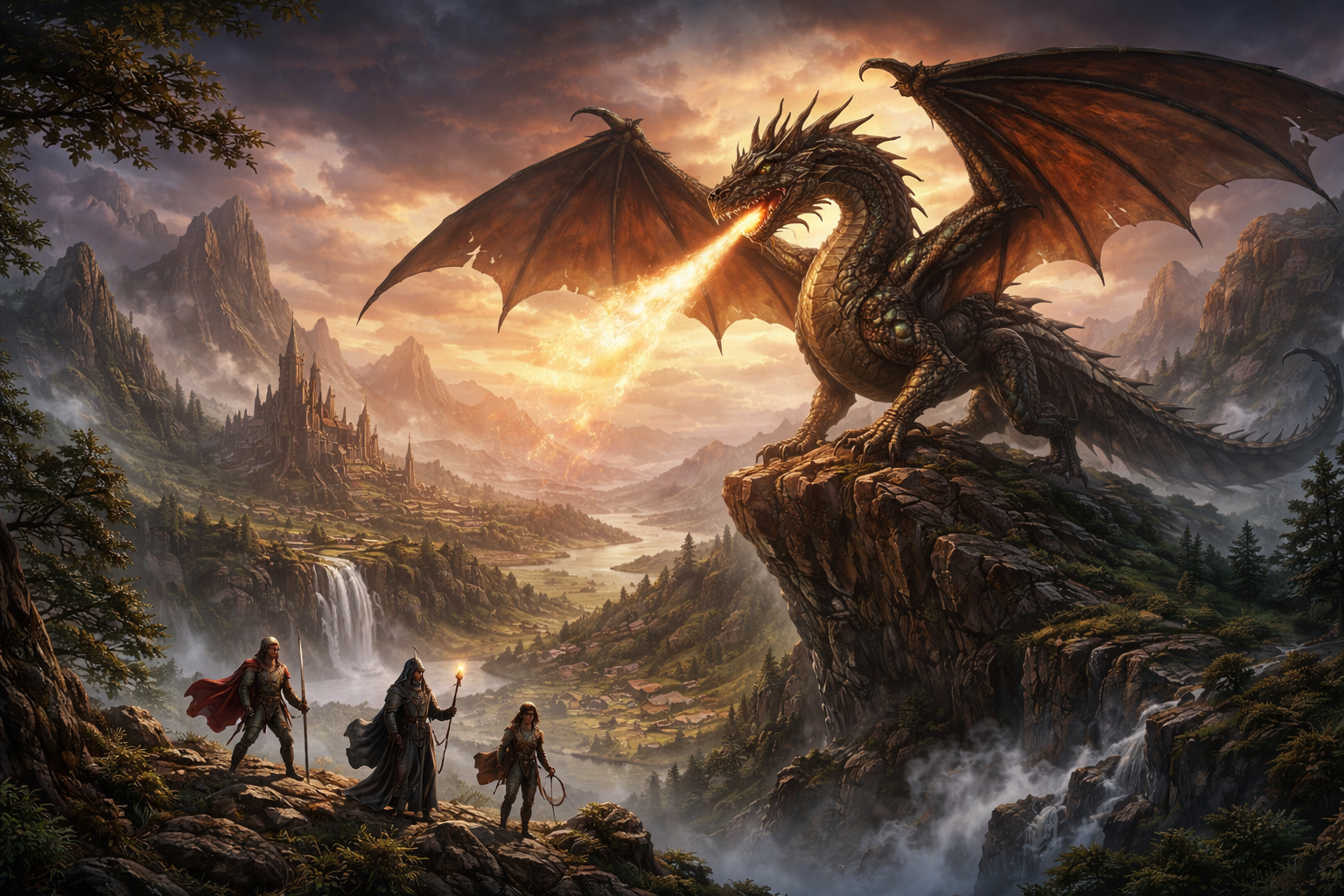
I LOVE DRAGONS!
I did not meet dragons in a book that announced itself as fantasy. There was no trumpet blast of destiny, no heroic checklist, no map at the front with a warning that here be monsters. Dragons entered my life quietly, the way the most durable ideas often do, without ceremony and without permission.
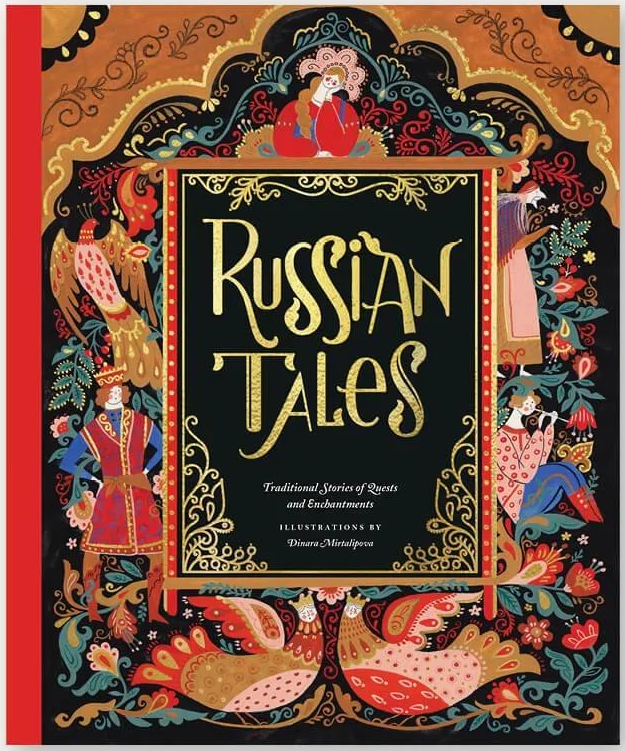
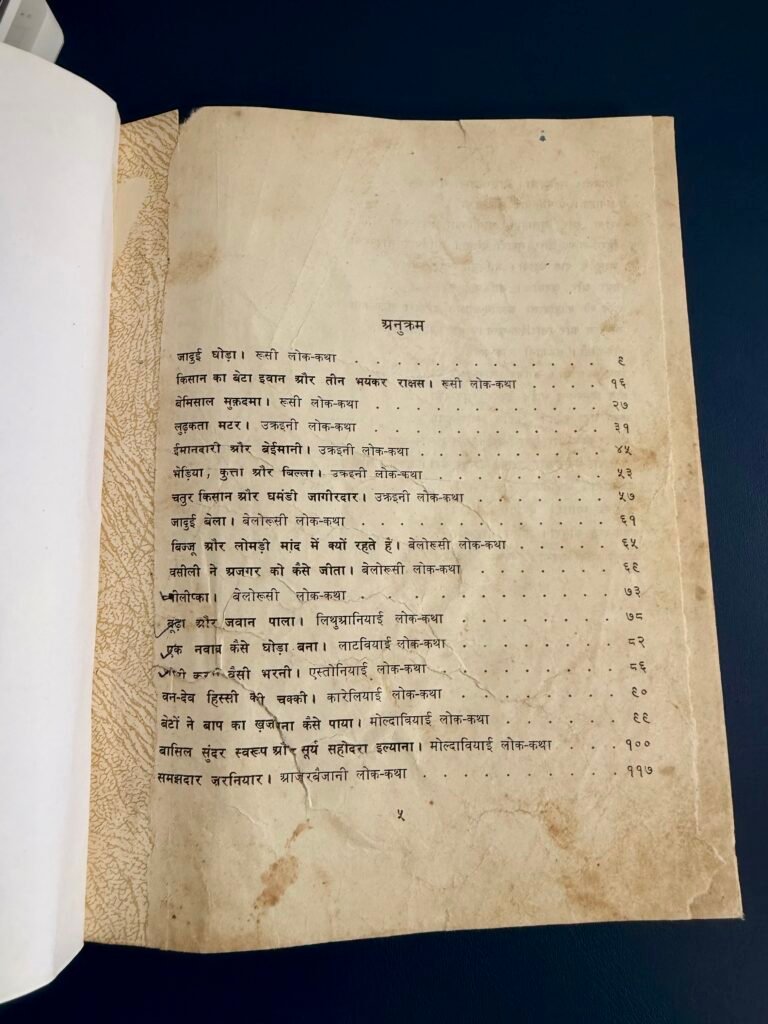
When I was a child, my father used to take me to a small New Age Book Center bookshop near the Amritsar Bus Stand. It was not a grand place. It did not try to impress you. The shelves were crowded, the air faintly dusty, and the books seemed to lean into one another like conspirators. What mattered was not the décor but the range of worlds hiding there. The shop carried a remarkable number of books published by Russian books – Mir Publications. Translations from Russian. Folk tales, myths, science primers, strange illustrated volumes that felt both serious and playful at the same time.
I did not know it then, but those books were doing something important. They were teaching me that stories did not belong to one culture, one language, or one geography. They wandered. They migrated. They resurfaced in unfamiliar shapes.
Many of those Russian folk tales were populated with creatures that felt ancient even when I did not understand their names. Serpents that coiled around mountains. Beasts that guarded thresholds rather than treasure. Creatures that were not quite evil but never safe. Dragons appeared there not as trophies to be claimed but as facts of the landscape. They were storms with scales. They were hunger with intelligence. They were inevitabilities.
That distinction mattered, though I could not articulate it yet.
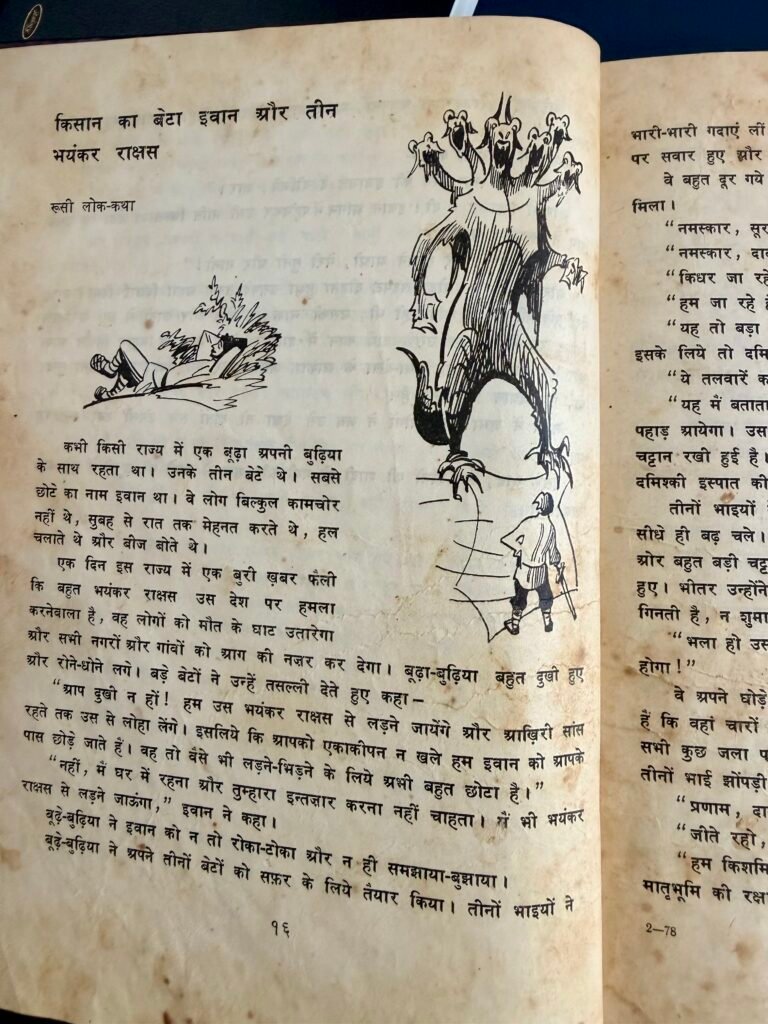
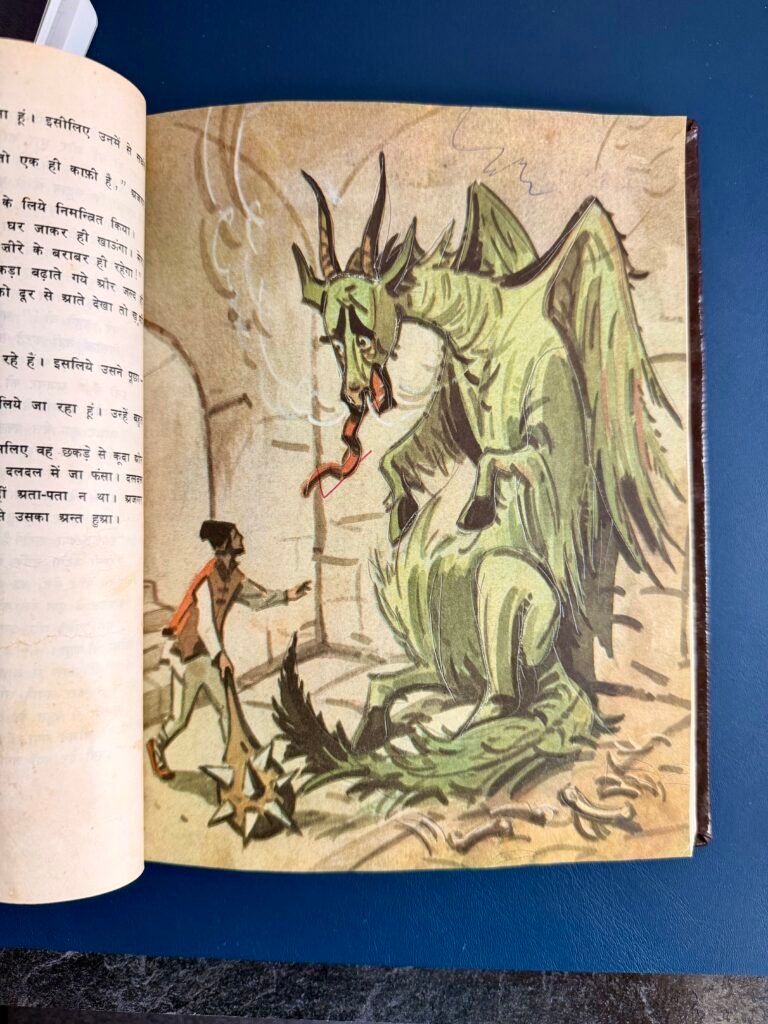
At that age, I did what many children do when something captures their imagination completely. I gravitated toward it instinctively. If a book had a dragon on its cover, I picked it up. If a toy vaguely resembled a dragon, it came home with me. I drew them constantly, though my drawings were terrible. Long necks, coiled bodies, too many teeth. The drawings were not attempts at realism. They were attempts at recognition. I was trying to get something right that I could feel but not yet name.
What fascinated me was not just that dragons existed in stories. It was that they appeared everywhere, wearing different masks. A serpent here, a winged beast there. Sometimes they lived in water, sometimes underground, sometimes in the sky. Sometimes they spoke. Sometimes they did not. Sometimes they were killed. Sometimes they could not be. Yet they always felt related, as if they were variations on a single, stubborn idea.
Long before I understood mythology, I understood pattern.
That early exposure mattered more than I realized. It trained me to approach stories sideways rather than head-on. I learned not to ask only what a creature did in a story, but what work it was doing. What anxiety it carried. What boundary it marked. Dragons, even in those early readings, were rarely random obstacles. They existed where something was blocked, hoarded, delayed, or protected. A river that would not flow. A mountain pass that could not be crossed. A truth that could not be faced directly.
As I grew older, fairy tales broadened into legends, and legends into larger mythic structures. But the dragon never left. Other childhood fascinations faded. Cowboys gave way to astronauts, astronauts to detectives, detectives to something else entirely. Dragons endured. They matured alongside me. They changed shape as my questions changed shape.
Eventually, as it does for many people of my generation, fantasy formalized itself through games. I encountered dragons again through Dungeons & Dragons, but by then I was already primed. I did not see them merely as high-level monsters guarding piles of gold. I was interested in their histories, their motives, their lairs. I wanted to know why this dragon slept beneath a ruined city rather than a pristine one. Why it negotiated instead of attacking. Why it remembered things that no living character could.
The game mechanics were incidental. What mattered was that the dragon had become a narrative anchor. It forced the world to acknowledge time. Dragons remembered empires. They had outlived kings. They were not impressed by human urgency.
That idea stayed with me.
Looking back, I realize that dragons appealed to me because they were not neat. They resisted simplification. Angels and demons, heroes and villains, even gods often came with instruction manuals. Dragons did not. They were morally inconvenient. They could be wise without being kind, powerful without being just, destructive without being malicious. They occupied a space that stories often struggle with: forces that are neither redeemable nor dismissible.
Dragons did not promise progress. They promised consequence.
As I read more widely, I began to notice something else. Dragons appeared most often at moments of cultural tension. They surfaced when societies were negotiating transitions. When agricultural life replaced nomadic life. When religions displaced older cosmologies. When borders hardened and trade expanded. Dragons showed up where the world was changing faster than people were comfortable with.
In hindsight, that should not have surprised me. A dragon is an excellent container for collective anxiety. It can absorb fear without explanation. It can justify caution. It can stand in for everything that feels too old, too powerful, or too uncontrollable to dismantle neatly.
Yet dragons were never only about fear. Even as a child, I sensed that. There was reverence there too. Awe. The recognition that not everything dangerous is disposable, and not everything powerful is corrupt.
That tension is what separates dragons from mere monsters. Monsters exist to be defeated. Dragons exist to be reckoned with.
This is why dragons persist when other mythic creatures fade into niche interest. They scale. They adapt. They survive reinterpretation. They can be pagan chaos, Christian evil, imperial authority, folkloric nuisance, literary character, corporate logo, or personal metaphor without losing their core identity. They are elastic without being empty.
In my own life, dragons became markers of curiosity. Whenever I encountered a new culture, a new mythology, a new literary tradition, I looked for the dragon. Not because I expected to find the same creature, but because I wanted to see what that culture feared, respected, or refused to resolve. The dragon, in whatever form it took, usually told me.
This series is not an attempt to catalogue dragons exhaustively. Others have done that, and done it well. Nor is it an effort to reduce them to a single psychological explanation. Dragons resist that kind of closure. What I want to do instead is follow their trail. To trace how they move from chaos to symbol, from nature to theology, from folklore to literature, from sacred terror to imaginative companionship.
I want to understand why dragons appear when language struggles, why they guard thresholds rather than destinations, why they so often hoard rather than consume. I want to explore why so many cultures independently decided that the best way to talk about power was to give it scales and fire, or coils and storms.
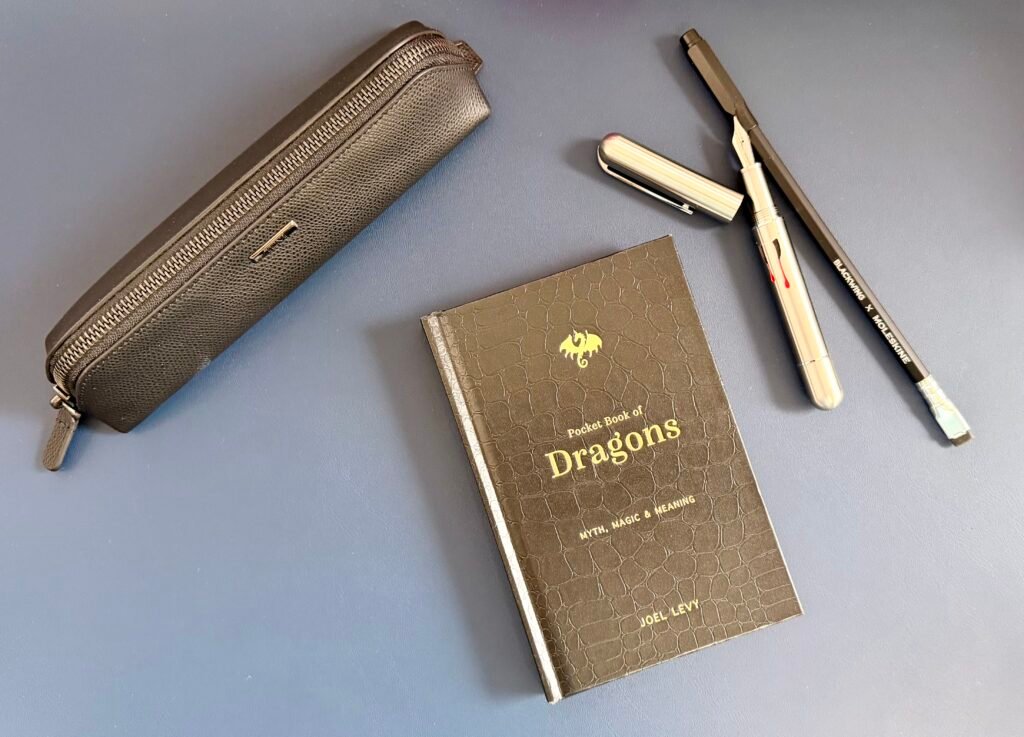
Most of all, I want to reflect on why dragons still matter.
In a world that prides itself on demystification, dragons continue to thrive. They flourish in fantasy literature, in games, in films, in art. They appear in boardrooms and branding, in political cartoons and personal metaphors. We still speak of slaying dragons, feeding dragons, waking dragons, chasing dragons. The language persists because the problem persists.
There are still forces larger than us. Still systems that hoard. Still dangers that cannot be confronted directly. Still thresholds we circle rather than cross.
Dragons did not leave because we outgrew them. They stayed because we did not.
This series begins where my fascination began, in a small bookshop near a bus stand, with stories that crossed borders before I knew what borders meant. From there, it moves outward into ancient worlds, distant cultures, cold northern myths, medieval theology, village folklore, and modern literature. But the throughline remains the same.
The dragon is not a relic. It is a survivor.
And before I knew its many names, before I learned how often it would reappear, it had already taught me something essential: that the most enduring stories are the ones that refuse to be solved. We just accept them, as they are.
Other posts in this series:
- Dragons, Part 1: When Chaos Had Scales, or Dragons of the Ancient World (Coming April 9)
- Dragons, Part 2: Beneath Clouds and Currents – Dragons of the East (Coming April 16)
- Dragons, Part 3: Coiled Around the World – Wyrms of the Northern Lands (Coming April 23)
- Dragons, Part 4: Saints, Serpents, and the Invention of Evil (Coming April 30)
- Dragons, Part 5: Village Nightmares and Clever Beasts: Dragons of Fable and Folklore ((Coming May 7)
- Dragons, Part 6: From Fire to Ink: Dragons in Literature (Coming May 14)
- Dragons, Part 7: Where Dragons Still Live — Scheduled (Coming May 21)
👁️ 11 views