

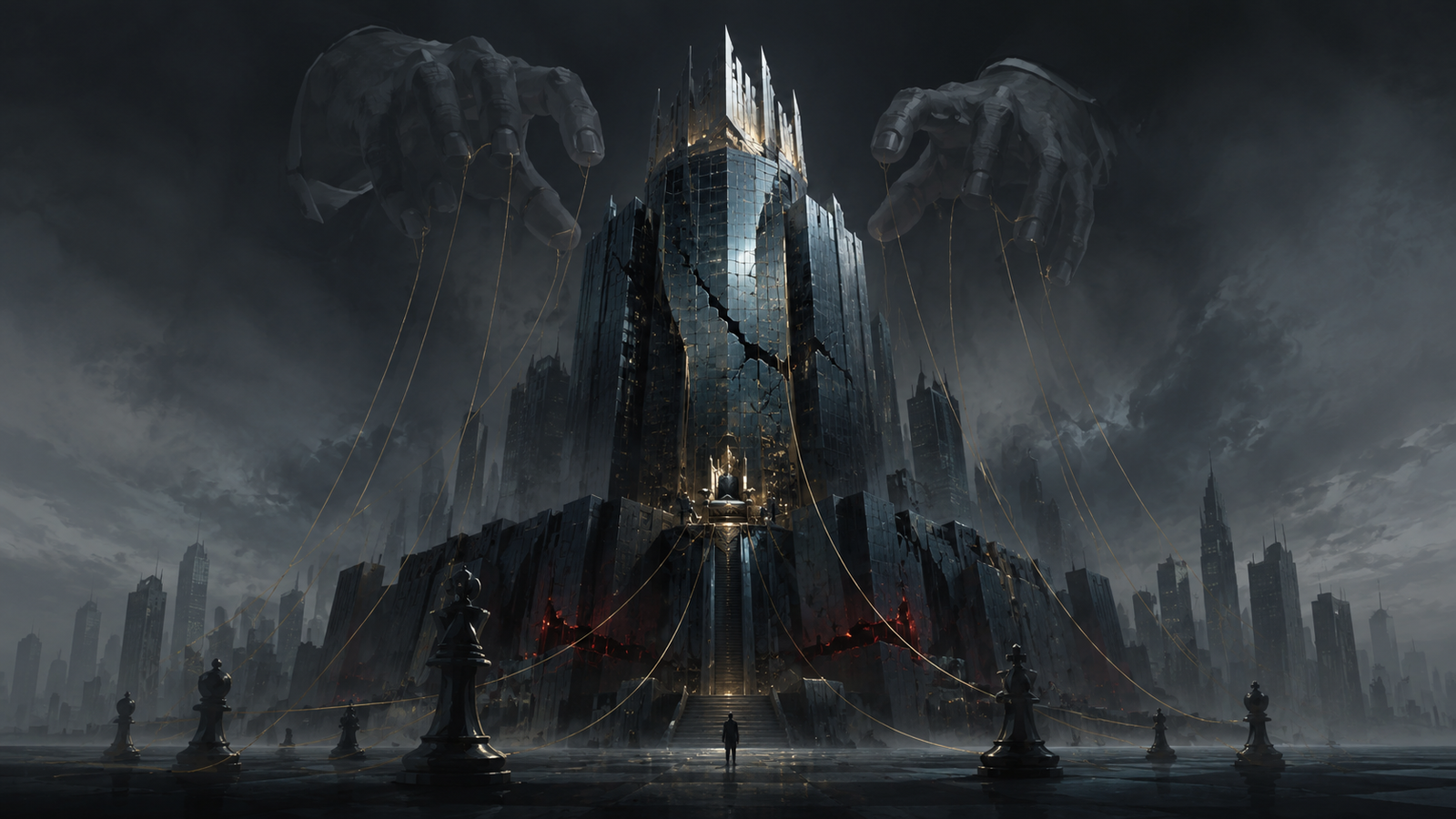
During a car ride through the Chicago suburbs with my colleague, we found ourselves discussing “evil”.
Not only the evil in the comic book and movie sense (we are both fans of James Bond), with a cape, a scar, and dramatic background music and also more the familiar kind. The kind you meet in workplaces, institutions, communities, and sometimes in positions of influence. Someone who manipulates, schemes, damages others, and still seems convinced that no one can see through the performance.
I asked my boss a simple question. How can someone really believe that people cannot see through their ruse?
His answer stayed with me.

“The enterprise of evil operates on the illusion of invincibility.”
That one sentence explained more than anything. It explained a pattern. Not only in the cominc books I love; also, the familiar kind.
Villains, corrupt leaders, toxic executives, abusive institutions, and power-drunk regimes all seem to operate from the same basic premise: we are untouchable. They believe their power is permanent, their manipulation is invisible, their followers are loyal, their critics are weak, and their consequences can always be delayed, denied, bought, buried, or branded away.
For a while, it works.
And that is the uncomfortable part.
Evil often looks strong before it collapses. Corruption often looks organized before the rot becomes visible. Cruelty often looks decisive before people recognize it as insecurity wearing armor. Domination often looks like control, until the system becomes too rigid to survive contact with reality.
The illusion of invincibility is not just a psychological flaw. It is the operating system of corrupt power.
And like most bad operating systems, it eventually crashes.
The Villain’s First Mistake
The first mistake villains make is assuming fear is the same as loyalty.
Fear can silence people. It can make them comply. It can make them smile in meetings, nod in agreement, forward the official message, and repeat the approved slogans. But fear does not create loyalty. It creates memory.
People remember who humiliated them. They remember who betrayed them. They remember who took credit, shifted blame, punished dissent, and rewarded obedience over truth.
A power structure built on fear is like a building held together by pressure instead of trust. It may stand for a while, but it requires constant force to keep it from falling apart.
That is why domination is exhausting. The cruel leader must keep watching everyone. The corrupt institution must keep managing the narrative. The manipulator must keep updating the lie. The tyrant must keep punishing examples. The brand must keep hiding the product. The empire must keep expanding because stillness creates scrutiny.
This is the fatal weakness of the enterprise of evil: it cannot rest.
Good systems can absorb criticism. Healthy leaders can admit mistakes. Strong cultures can self-correct. But corrupt systems treat every correction as a threat. They do not adapt because adaptation requires humility. They do not collaborate because collaboration requires trust. They do not apologize because apology requires conscience.
So they double down.
And doubling down works, until it doesn’t.

Machiavelli and the Misreading of Power
Whenever power and morality are discussed, Machiavelli usually enters the room.
He is often reduced to a slogan: it is better to be feared than loved. That is the popular version. The actual discussion is more complex, but the popular interpretation has done enough damage on its own.
Many leaders have absorbed the worst possible lesson from Machiavelli. They believe morality is a weakness, fear is a tool, image is everything, and power justifies whatever is necessary to keep power.
This can create short-term effectiveness. Ruthlessness can move quickly. It can eliminate obstacles. It can intimidate opposition. It can produce results on a quarterly dashboard.
But history is filled with rulers, executives, and institutions that confused control with durability.
The problem with ruthless power is that it rarely builds genuine commitment. It builds dependency, resentment, and hidden opposition. People may obey when they have no choice. But the moment the system weakens, they stop defending it.
That is when the “invincible” leader discovers the truth.
They were not surrounded by loyalists.
They were surrounded by survivors.

The Superhuman Fantasy
Modern media understands this theme well.
In stories like Invincible, the Viltrumite worldview is built on domination. Strength is destiny. Compassion is weakness. Conquest is not a moral failure, but a natural right. If you are powerful enough to take something, you deserve to take it.
It is a brutally simple philosophy, which is exactly why it eventually fails.
Any ideology based only on strength must constantly prove strength. It cannot tolerate vulnerability. It cannot value difference. It cannot learn from the weak. It cannot build partnership because partnership implies equality, or at least mutual respect.
The strong survive, yes.
But only the adaptable endure.
This is where the villain often misunderstands evolution. Survival is not simply about being the biggest, cruelest, fastest, or most violent. Survival is about fit. It is about adaptation. It is about responding to change without breaking.
A rigid empire may conquer worlds, but it may still lose to a single act of conscience. A superhuman may crush buildings, but still fail to understand love, loyalty, or sacrifice. A violent system may win battles, but lose meaning.
Power without conscience can dominate.
It cannot belong.

The Corporate Version of Evil
Then there is the corporate version, which is often less theatrical but more familiar.
Shows like The Boys capture this brilliantly. The evil is not just in the superpowered individuals. It is in the machinery around them: the branding, the public relations, the legal teams, the crisis management, the slogans, the fake apologies, the patriotic packaging, the smiling executives, the approved merchandise, and the carefully engineered illusion that everything is under control.
This is the enterprise of evil in its most modern form.
Not darkness in a castle.
Darkness with a marketing department.
Corporate corruption rarely announces itself as corruption. It calls itself strategy. It calls itself alignment. It calls itself shareholder value. It calls itself difficult decisions. It calls itself protecting the company. It calls itself “moving fast.”
But underneath the language, the pattern is old.
Hide the damage. Reward the loyal. Punish the honest. Manage perception. Control the message. Discredit the whistleblower. Turn morality into a cost center. Turn accountability into a branding exercise.
For a while, the stock price may hold. The press release may work. The lawyers may delay. The brand may remain polished.
But rot has a habit of becoming structural.
And once the structure is compromised, no amount of messaging can hold it up forever.
Why People See Through the Ruse
This brings me back to the question I asked in the car.
How can someone believe people cannot see through them?
The answer is that they do not need everyone to believe them. They only need enough people to stay silent.
That is the trick.
The manipulator does not require universal trust. The corrupt leader does not require universal admiration. The toxic institution does not require universal innocence. They require hesitation. They require fear. They require fatigue. They require people to say, “It is not worth it,” “This is just how things work,” “Someone else will deal with it,” or “I need to protect myself.”
The illusion of invincibility depends less on deception and more on resignation.
Everyone may know. But if no one acts, the enterprise continues.
This is why evil often becomes arrogant. It mistakes silence for blindness. It mistakes compliance for belief. It mistakes exhaustion for defeat. It mistakes people’s patience for weakness.
That is usually the beginning of the end.
Because when enough people stop being afraid, the entire illusion starts to crack.
The Fragility of Cruel Systems
Cruel systems are fragile because they require too many lies to survive.
They need the leader to always appear strong. They need the victims to stay quiet. They need the insiders to stay obedient. They need the public to stay distracted. They need critics to look unreasonable. They need every failure to be someone else’s fault.
That is a lot of maintenance.
Good systems are not perfect, but they are easier to maintain because they can tell the truth. They can admit, adjust, repair, and move forward. Corrupt systems cannot do that. They must protect the myth.
The myth is always the same.
We cannot be challenged.
We cannot be exposed.
We cannot be replaced.
We cannot lose.
But invincibility is not a fact. It is a performance.
And every performance ends.

The Real Power
The irony is that the qualities evil dismisses as weakness are often the qualities that create real durability.
Conscience creates self-correction.
Collaboration creates resilience.
Humility creates learning.
Trust creates loyalty.
Compassion creates belonging.
Adaptability creates survival.
These are not soft values. They are structural advantages.
A team that can speak honestly will outperform a team that lives in fear. An institution that can correct itself will outlast one that hides every defect. A leader who earns trust will have defenders when things go wrong. A leader who only commands fear will have witnesses.
This is true in politics. It is true in business. It is true in families. It is true in stories. It is true in empires, companies, and conference rooms.
The enterprise of evil believes power means never being questioned.
Real strength is being able to survive the question.
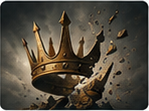
Invincible Until It Isn’t
The most dangerous people and institutions are often not the ones who know they are weak.
They are the ones who believe they are invincible.
They stop listening. They stop learning. They stop adapting. They surround themselves with flatterers, loyalists, cowards, and opportunists. They confuse fear with respect. They confuse silence with approval. They confuse control with truth.
And then one day, the illusion breaks.
Sometimes it breaks through scandal. Sometimes through rebellion. Sometimes through exposure. Sometimes through simple incompetence. Sometimes because one person refuses to keep pretending.
That is the lesson villains never learn.
People see more than they say.
They know more than they reveal.
They remember more than the powerful imagine.
The enterprise of evil may operate on the illusion of invincibility.
But its collapse usually begins with a much smaller truth.
Someone saw through it.
And eventually, someone said so.
👁️ 115 views