

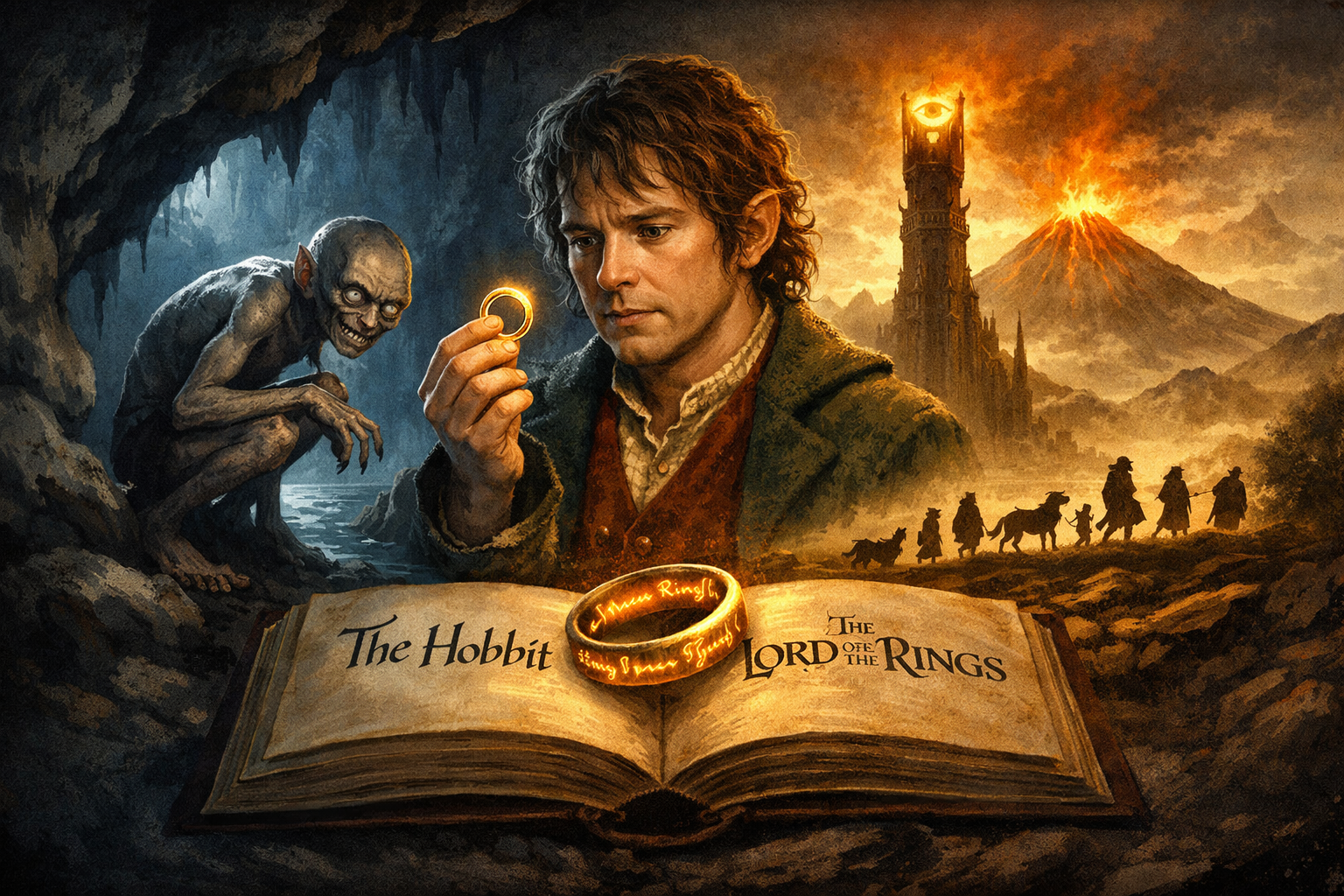
Most readers believe they have read The Hobbit. In truth, most have read a revised version of it. The difference is not cosmetic. It is not a matter of phrasing or minor edits. It is a fundamental change in how one of the most important objects in fantasy literature enters the story.
And like many of Tolkien’s decisions, it reveals something deeper about how he thought about storytelling.
This is not just about a change in text. It is about integrity.
A Children’s Tale Meets a Larger World
When The Hobbit was published in 1937, it stood on its own. It was a children’s story, whimsical in tone, light in consequence, and complete in itself. Bilbo finds a ring, uses it to escape danger, and continues his adventure. The ring is useful, but it is not yet important. In the original version, Bilbo wins the ring in a game of riddles with Gollum. The terms are simple. If Gollum wins, he eats Bilbo. If Bilbo wins, he receives a present. Bilbo wins. Gollum honors the agreement and goes to fetch the ring, only to discover it is missing. He then offers to guide Bilbo out instead. They part on relatively civil terms. That version works perfectly well in a children’s story. But it collapses under the weight of what came next.
The Problem Tolkien Created
Tolkien did not originally set out to write The Lord of the Rings as we know it. That story emerged slowly, over the years. But as it grew, the ring changed. It was no longer a trinket. It became the One Ring. It became an object of immense power, corruption, and obsession. It became something that no one, especially Gollum, would ever willingly give up. And that is where the problem surfaced. If the ring is the One Ring, then the original version of The Hobbit makes no sense. Gollum would never offer it as a prize. Not in a game. Not under any circumstances. The idea that he would casually give it away contradicts everything we later learn about him and the ring’s hold over its bearer. Tolkien was now facing a choice that many writers encounter when expanding a story. Ignore the inconsistency. Or fix it.
The Rewrite That Changed Everything
Most writers would have left it alone. They would assume readers would overlook the inconsistency. After all, the original story worked. The new one was stronger. Readers would reconcile the gap. Tolkien was not like most writers. So he rewrote the chapter. In the revised version, the structure of the scene remains familiar, but its meaning changes completely. Gollum no longer offers the ring as a reward. Instead, he promises to show Bilbo the way out if he wins the riddle game. The stakes shift from possession to survival. After losing, Gollum goes back to his island, not to fetch a gift, but to retrieve the ring. His intent is clear. He plans to use it to turn invisible, sneak up on Bilbo, and kill him. The ring is no longer something he can part with. It is something he cannot live without. When Gollum discovers the ring is gone, the tone darkens immediately. His reaction is not disappointment. It is rage, obsession, and despair. He realizes Bilbo has taken it and sets out to hunt him. Bilbo does not win the ring. He finds it. And he keeps it.
That is a very different moral position.
A Subtle Shift in Bilbo
This change does not just affect Gollum. It reshapes Bilbo. In the original version, Bilbo wins the ring fairly. He is clever, lucky, and deserving. The story reinforces his growth as a hero. In the revised version, Bilbo takes something that does not belong to him. Yes, he is in danger. Yes, Gollum intends to kill him. But the act is no longer clean. It introduces ambiguity. Bilbo becomes more human. Less heroic in the simple sense. More aligned with the moral complexity that defines The Lord of the Rings. Tolkien did not just fix a plot inconsistency. He aligned The Hobbit’s tone with the deeper themes of the larger legendarium.
The Masterstroke: Turning a Mistake into Story
At this point, Tolkien could have stopped. The narrative is now aligned. The ring made sense. Gollum’s character was consistent. The transition into The Lord of the Rings was secure. But Tolkien went further. He did something very few writers attempt. He made the inconsistency part of the story. Tolkien framed The Hobbit as a memoir written by Bilbo himself. In that context, the original version becomes something else entirely. It becomes a lie. Bilbo, under the subtle influence of the ring, alters the story of how he acquired it. He presents it as a fair exchange, a harmless reward. He avoids admitting that he found it and kept it. Later accounts, attributed to Frodo and Sam, include the true version. But the original remains preserved as Bilbo wrote it. This is not just a clever fix. It is a narrative expansion. Bilbo’s dishonesty becomes evidence of the ring’s corrupting influence. Gandalf’s suspicion of the story becomes a key driver in uncovering the truth about the ring. What began as a continuity issue becomes a foundational element of the larger plot.
What This Reveals About Tolkien
This episode tells you everything about Tolkien as a writer. He was not satisfied with surface-level coherence. He cared about internal truth. Not just whether events lined up, but whether they felt right within the moral and emotional logic of his world. He also understood something that many modern storytellers overlook. Details matter. Not because readers will always notice them. But because they shape the integrity of the world. A small inconsistency, if left unresolved, weakens the foundation. A small correction, if done well, strengthens everything that follows. Tolkien did not patch the story. He deepened it.
The Larger Lesson
There is a broader lesson here, beyond Tolkien and beyond literature. When you build something over time, your early decisions will not always align with what comes later. That is inevitable. Growth creates tension with the past. You have three options.
Ignore the inconsistency. Patch it superficially. Or rework it to strengthen the whole. The first is easy but weak. The second is practical but forgettable. The third is difficult but enduring. Tolkien chose the third path. And that is why his world still holds together.
What Remains
The change Tolkien made to The Hobbit is often treated as a piece of trivia. A curious footnote for attentive readers. It is more than that. It is a case study in creative integrity. In long-term thinking. In respecting the logic of your own creation enough to revisit and refine it. Most importantly, it shows that even the smallest detail can carry the weight of the entire story. If you are willing to take it seriously.
Post Script
If this essay has made you curious about the original version of The Hobbit, you can still find it, though not easily.
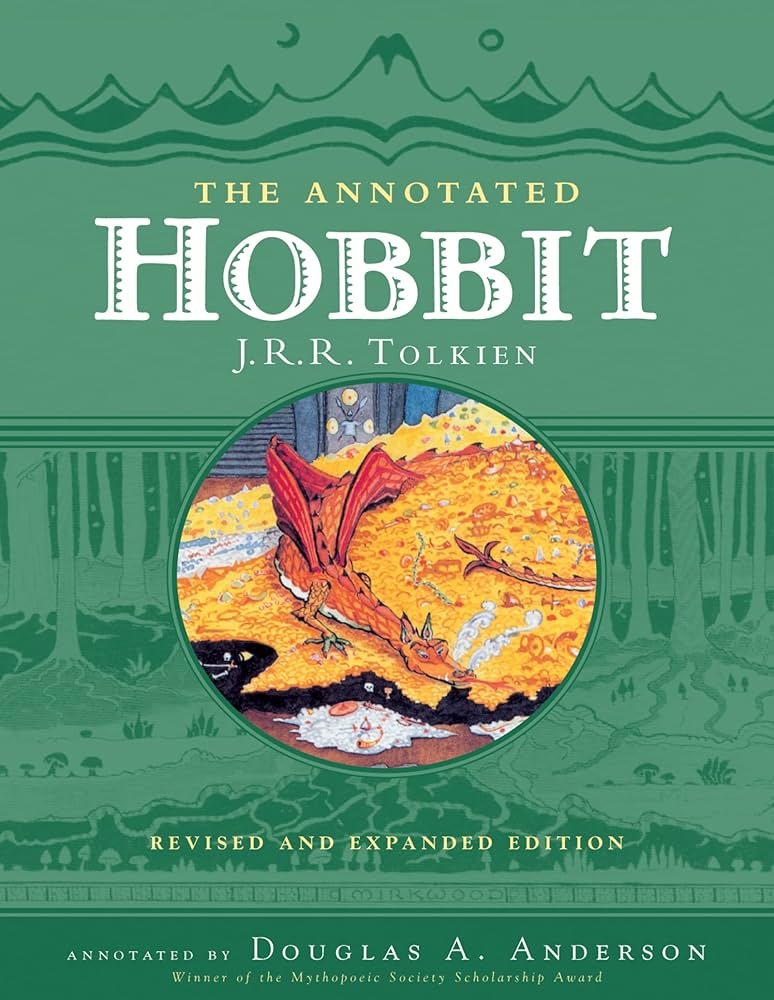
The simplest place to start is The Annotated Hobbit by Douglas A. Anderson. It includes both versions of the “Riddles in the Dark” chapter and clearly shows what changed.
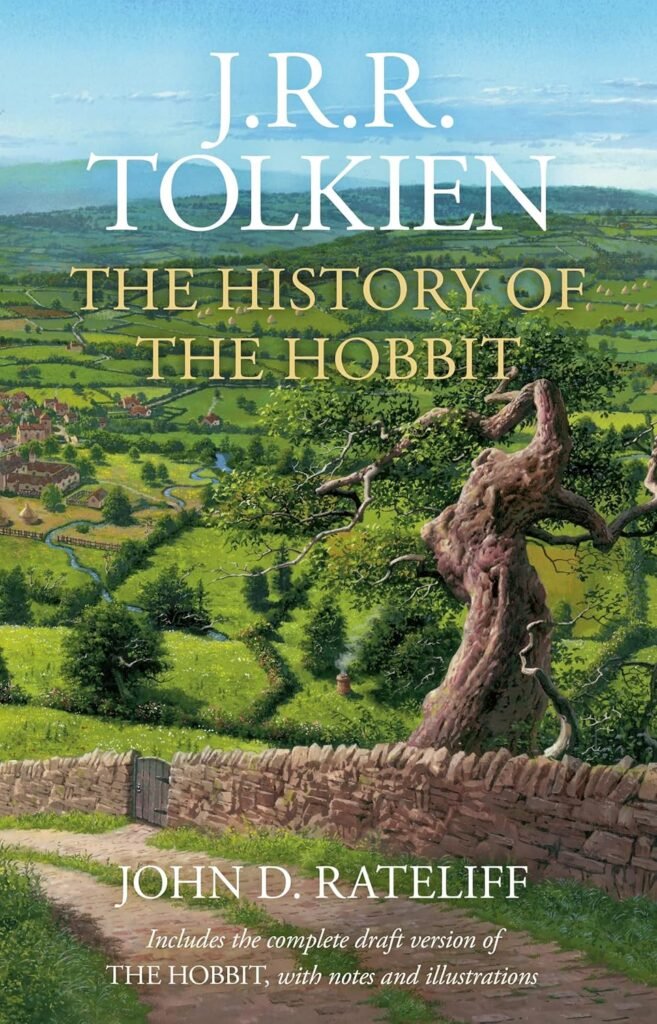
For a deeper dive, The History of The Hobbit by John D. Rateliff explores how Tolkien developed the story over time.
The original 1937 edition itself is rare and usually limited to collectors and libraries. You may find excerpts online, but full versions are harder to access.
It is worth noting that the change is concentrated in a single chapter. But that one change reshaped everything that followed.
Check out other essays on Tolkien and Middle-earth.
- The Pen of Middle-Earth Series
- The Pen of Middle-Earth: Tools that shaped J.R.R. Tolkien’s worlds
- The Pen of Middle-earth, Part I: Ink and Imagination – The Hand That Built Middle-earth
- The Pen of Middle-earth, Part II: The Instruments of Creation – Tolkien’s Pens, Nibs, and Inkwells
- The Pen of Middle-earth, Part III: The Script of Arda – How Tools Shaped Language
- The Pen of Middle-earth, Part IV: Recreating Tolkien – Modern Calligraphers and Fountain Pen Enthusiasts
- The Pen of Middle-earth, Part V: The Slowness of Creation – What Tolkien’s Pen Teaches Us
- History of Middle-Earth Series
- History of Middle-Earth, Part 1 – The Birth of a Legendarium
- History of Middle-Earth, Part 2 – The First Five Volumes: Early Myths & Lost Tales
- History of Middle-Earth, Part 3 – The Road to Númenor and the Shaping of History
- History of Middle-Earth, Part 4 – The Making of The Lord of the Rings
- History of Middle-Earth, Part 5 – The Later Silmarillion
- History of Middle-Earth, Part 6 – Peoples and the Nature of Middle-Earth
- Strider to High King: Aragorn’s Life After Sauron’s Fall
- LOTR’s Prologue: The Greatest Movie Opening Ever
- The Hidden Authors of Middle-earth: Tolkien’s Greatest Literary Illusion
- The Many Faces of Sauron: Understanding the Dark Lord’s Ten Forms in Middle-Earth
- Sauron Without the Ring: What Happened During the Lost Years
👁️ 186 views