

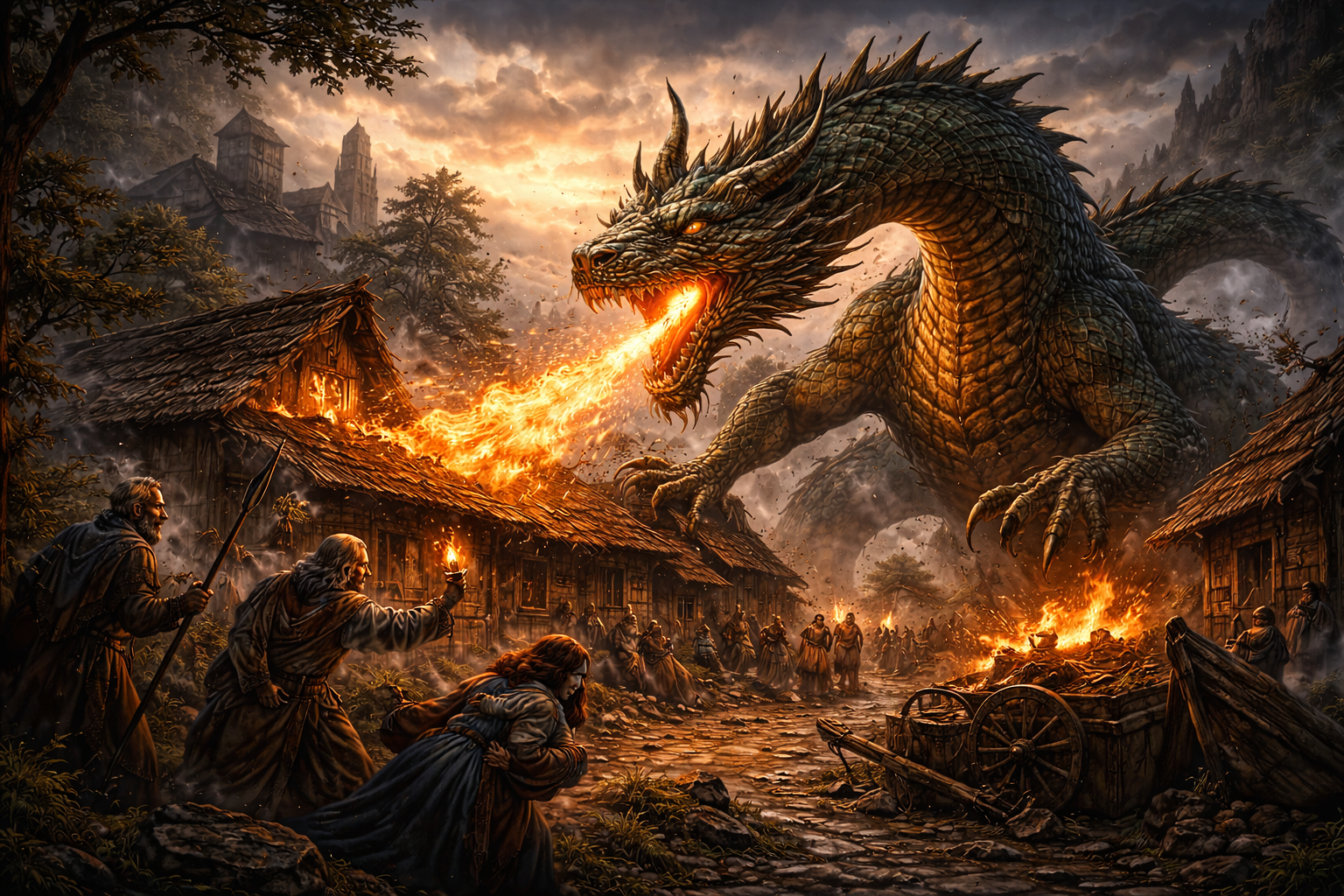
When dragons leave theology, they do not become grand again. They become local.
The dragons of fable and folklore are not cosmic principles or embodiments of evil. They are problems with addresses. They live in a specific hill, a bend in a river, a ruined tower just outside town. You know where they are. You know how long they have been there. Someone’s grandfather remembers when things were quieter, before the dragon arrived or before it grew bold enough to be noticed.
These dragons do not threaten the world. They threaten the way things are supposed to work.
That difference matters. Folklore dragons are not abstractions. They are woven into daily life. They interrupt farming cycles, block roads, poison wells, demand livestock, or simply make it unsafe to walk home after dark. They are tolerated for a time, feared habitually, and only confronted when avoidance becomes impossible.
In these stories, the dragon is less an enemy of order than a symptom of something unresolved.
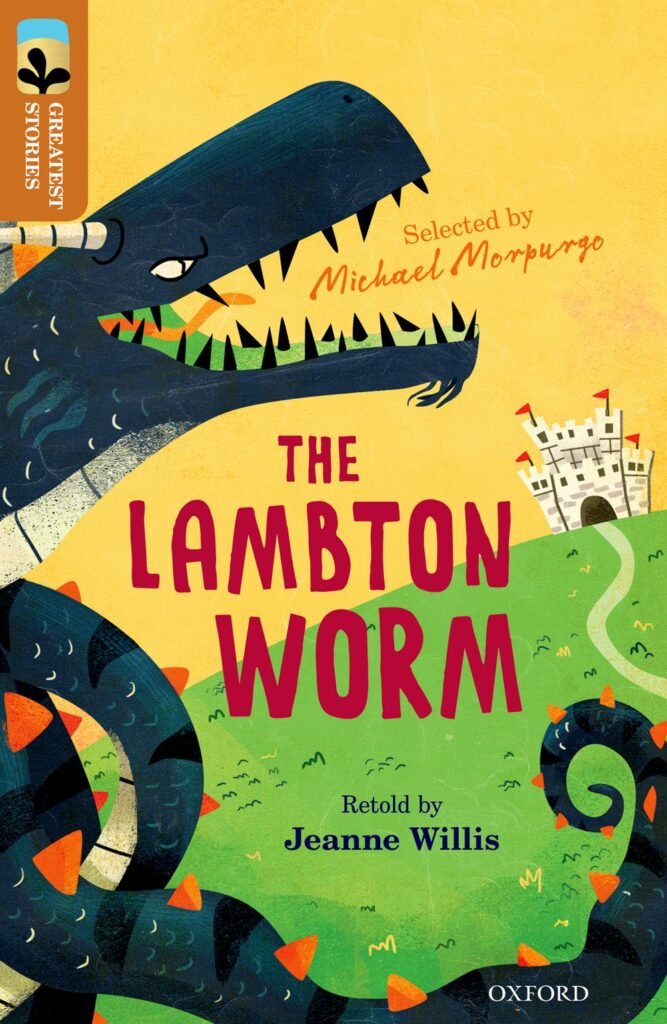
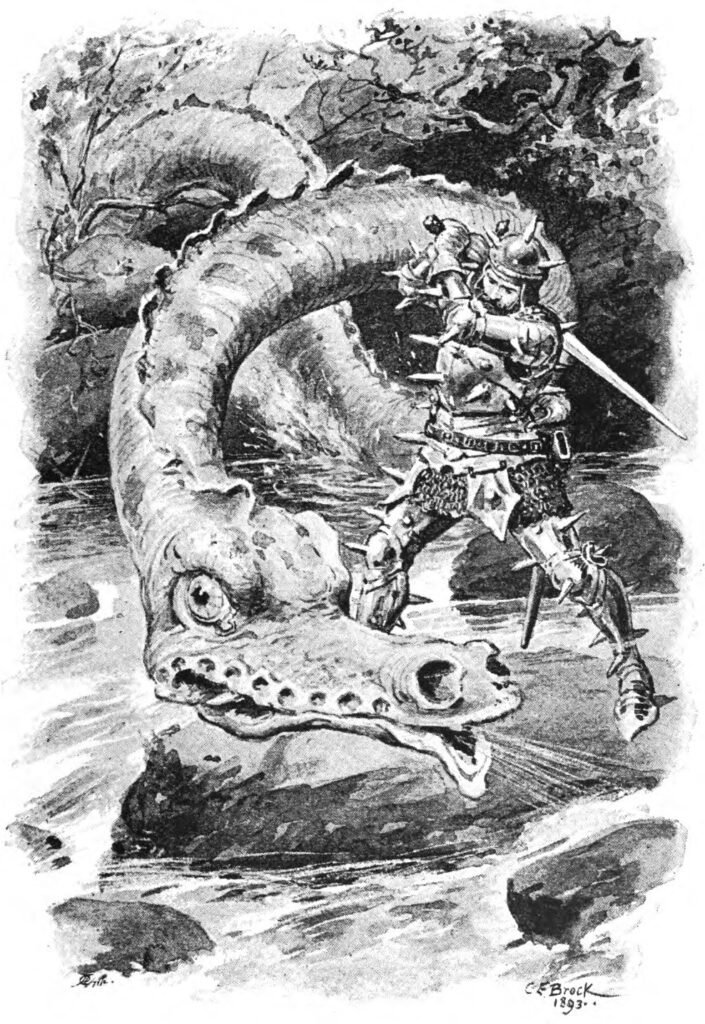
Consider the Lambton Worm. It does not begin as a dragon. It begins as negligence. A young man catches a strange, eel-like creature and throws it into a well rather than dealing with it responsibly. Over time, the creature grows, escapes, and becomes a monstrous presence that coils around hills and devours livestock. The dragon here is not an invasion. It is an outcome.
This is a recurring pattern in folklore. Dragons often arise because someone failed to act correctly at the right moment. A boundary was ignored. A warning dismissed. A responsibility deferred. The dragon is what deferred responsibility looks like when it matures.
Slaying such a dragon does not erase guilt. The Lambton legend famously ends with a curse that follows the hero’s lineage. The dragon’s death resolves the immediate crisis but leaves a residue. Folklore understands that some problems, even when solved, continue to echo.
This is a far cry from saintly dragon-slaying, where victory is clean and sanctified.
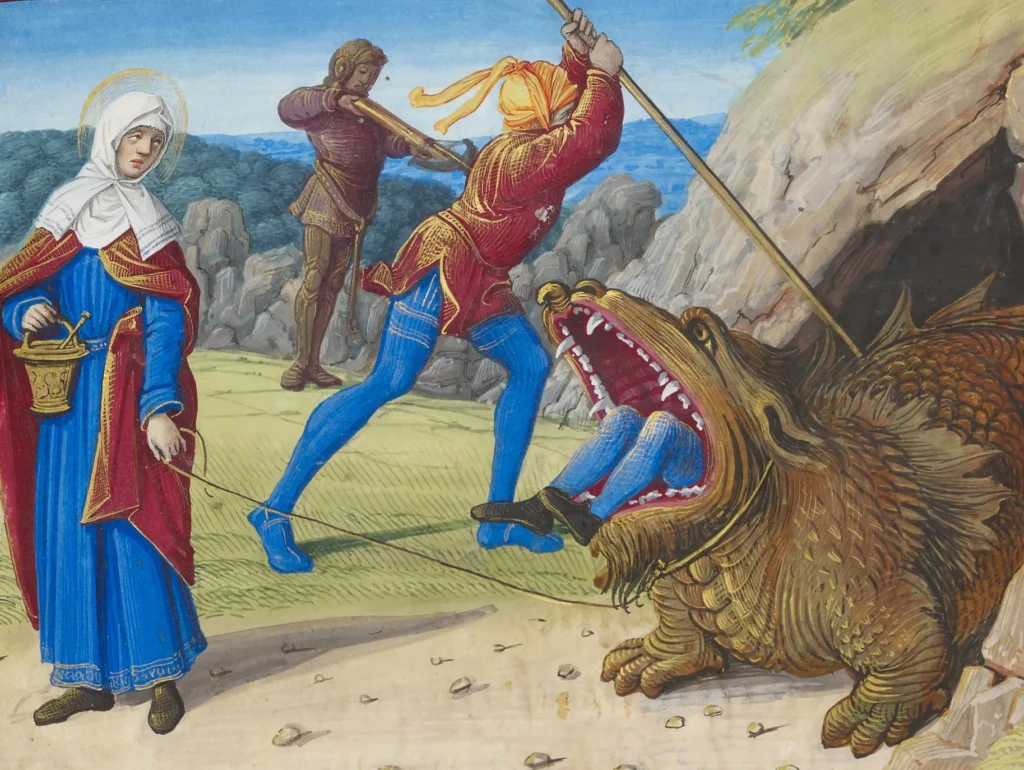
The Tarasque of southern France is another revealing example. This dragon is not cunning or hoarding gold. It is a chaotic, almost absurd creature that terrorizes the countryside. When it is finally confronted, it is not slain through brute force alone. It is subdued, tamed, and led into the city, where it is killed by the people it once threatened.
The emphasis here is communal. The dragon is not defeated by a lone hero acting on divine mandate. It is neutralized through collective action. And yet, the story does not celebrate this as an unambiguous triumph. The killing of the Tarasque feels uneasy, even cruel. The dragon, once tamed, becomes vulnerable.
Folklore dragons often occupy this uncomfortable space. They are dangerous, but they are also out of place. Their destruction restores order, but it also reveals something harsh about the community doing the destroying.
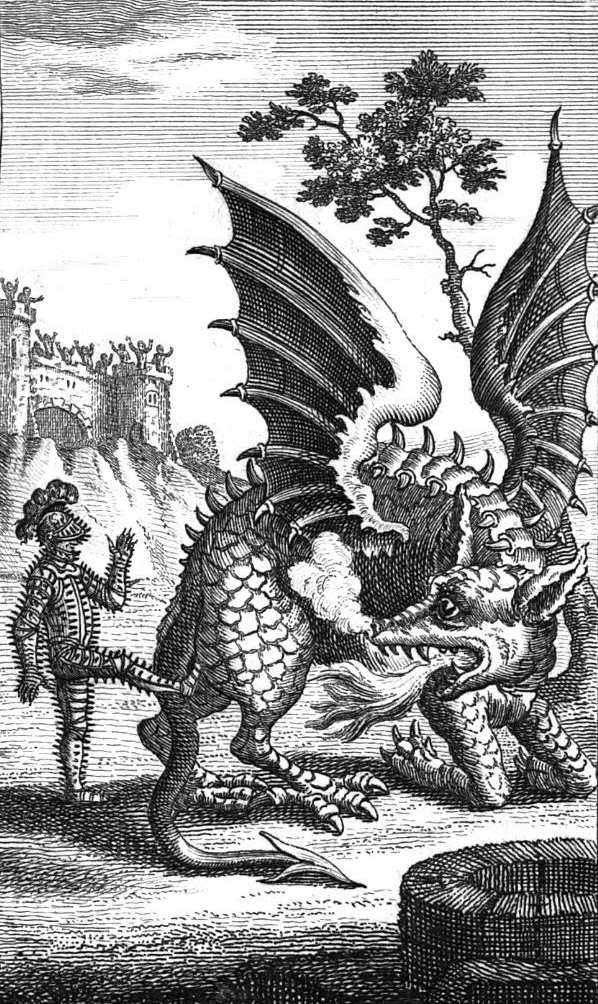
The Dragon of Wantley pushes this discomfort even further. It is a satirical dragon, a creature exaggerated to the point of parody. Its defeat is less about courage and more about cleverness. The hero wears spiked armor to counter the dragon’s embrace. The dragon is not outmatched by virtue but by ingenuity.
This story strips the dragon of its grandeur and, in doing so, strips heroism of its solemnity. The dragon becomes an object lesson not in faith or fate, but in problem-solving. It is a reminder that not every threat requires mythic force. Some require attention to detail.
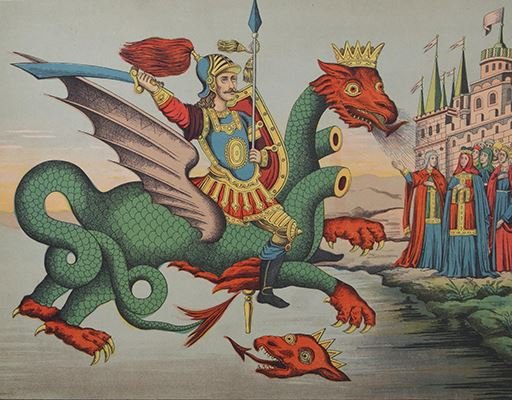
Across Europe and beyond, folklore dragons share a set of recognizable traits. They are territorial. They are repetitive. They do the same damage over and over again. They are rarely subtle. This repetition is important. It mirrors the way real-world problems persist. A blocked road does not become interesting because it blocks the road differently each day. It becomes intolerable because it never stops blocking it.
These dragons also demand payment. Livestock, food, sometimes people. The demand is ritualized. A schedule emerges. Everyone knows when the offering must be made. This ritualization of fear is deeply human. It is how communities cope with ongoing threats they do not yet know how to remove.
In these stories, the dragon becomes part of the social fabric before it becomes an enemy.
That integration is why folklore dragons often feel more unsettling than grand mythic ones. They are not distant. They are familiar. They shape habits. They alter routes. They become part of the landscape people plan around.
This intimacy extends beyond Europe. In parts of the Americas, thunderbirds and great serpents fill a similar role. They are not dragons in the medieval sense, but they occupy the same narrative function. They explain storms, destruction, and sudden violence. They are feared, respected, and sometimes appeased rather than destroyed.
What unites these creatures is not appearance, but function. They are localized embodiments of power that resist easy categorization as good or evil. They are dangerous because they are present, not because they are metaphysically corrupt.
Folklore dragons are also deeply tied to place-names, landmarks, and physical features. Hills are shaped like coils. Rivers bend where a dragon once lay. Ruins are explained through its passing. This grounding in geography gives the stories durability. Even when belief fades, the land remains.
You can stop believing in dragons and still walk around Dragon Hill.
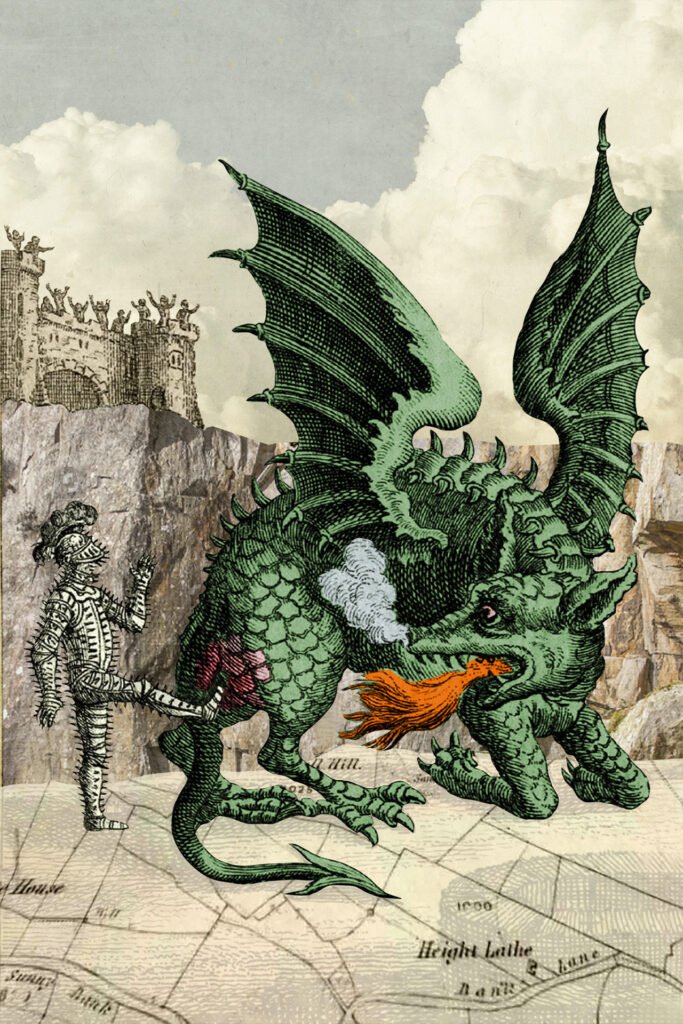

Another key feature of folklore dragons is their relationship to heroes. The hero is rarely exceptional at the start. He is often foolish, lazy, or marginal. He stumbles into the situation or is forced into it. His victory, when it comes, is not guaranteed by destiny. It is earned through improvisation, luck, or help from unexpected sources.
This makes folklore dragon-slaying feel provisional. The hero wins this time. There is no promise that another dragon will not emerge later.
That provisional quality reflects a worldview shaped by uncertainty. Folklore does not assume progress. It assumes cycles. Threats recur. Solutions are temporary. Vigilance matters more than triumph.
The iconography of the dragon shifts accordingly. These dragons are often grotesque, asymmetrical, awkward. They do not possess the elegant menace of later literary dragons. They are hybrids, exaggerations, exaggerations of exaggerations. Too many heads. Too many limbs. Too much appetite.
This excess is deliberate. It pushes the dragon toward caricature without defanging it. The dragon becomes something you can laugh at without forgetting that it will eat your sheep.
That balance between humor and horror is one of folklore’s great strengths. It allows communities to talk about fear without being paralyzed by it. It makes the dragon narratable.
As these stories travel, they adapt. Details change. Locations shift. Heroes are renamed. But the core structure persists. A persistent problem. A community under strain. An intervention that works, imperfectly.
By the time we reach the later Middle Ages, these folklore dragons begin to blur into literary and artistic traditions. They are simplified, stylized, moralized. But their DNA remains. You can still see the village dragon beneath the allegorical one. The practical problem beneath the spiritual lesson.
This matters because folklore preserves something that grand myth and formal theology often lose: scale. These dragons are the right size for human fear. They do not dwarf humanity. They threaten it in ways that feel solvable, even if costly.
In that sense, folklore dragons are profoundly humane. They acknowledge that life is messy, that danger is unevenly distributed, and that solutions are rarely clean. They teach that courage does not always look noble, and that cleverness can matter as much as strength.
Most importantly, they remind us that dragons are not always other. Sometimes they are consequences. Sometimes they are neglected duties. Sometimes they are what happens when small problems are allowed to grow in the dark.
In the next part of this series, dragons will grow grand again. They will enter literature with voices, personalities, and philosophies. They will become symbols not just of fear, but of memory, language, and imagination itself.
But here, in the villages and hills and half-remembered stories, the dragon is closer. It lives just far enough away to be plausible. Just close enough to matter.
And that may be the most dangerous kind of dragon there is.
Other posts in this series:
- How Dragons found me: My lifelong fascination with them
- Dragons, Part 1: When Chaos Had Scales, or Dragons of the Ancient World
- Dragons, Part 2: Beneath Clouds and Currents – Dragons of the East
- Dragons, Part 3: Coiled Around the World – Wyrms of the Northern Lands
- Dragons, Part 4: Saints, Serpents, and the Invention of Evil
- Dragons, Part 5: Village Nightmares and Clever Beasts: Dragons of Fable and Folklore
- Dragons, Part 6: From Fire to Ink: Dragons in Literature
- Dragons, Part 7: Where Dragons Still Live
👁️ 136 views